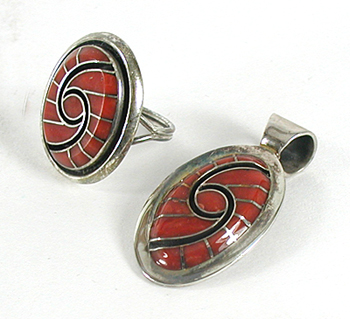
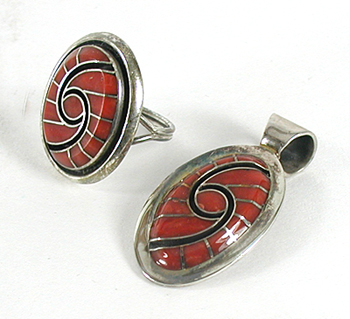
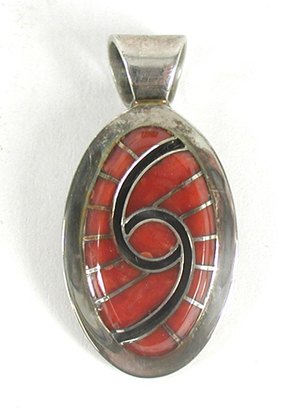
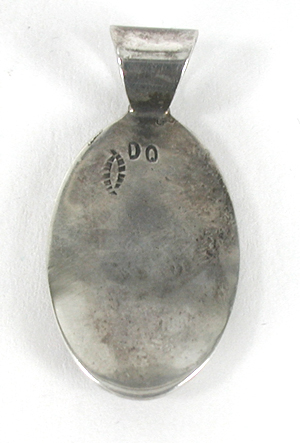
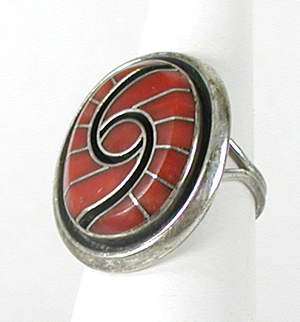
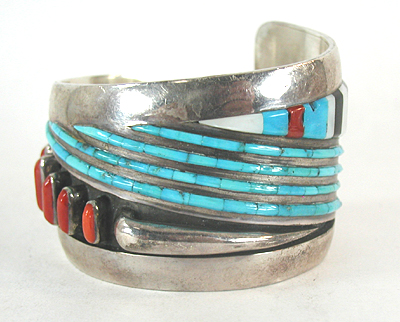
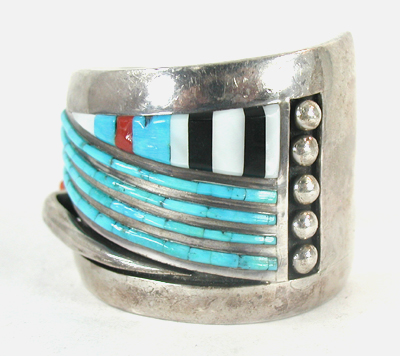
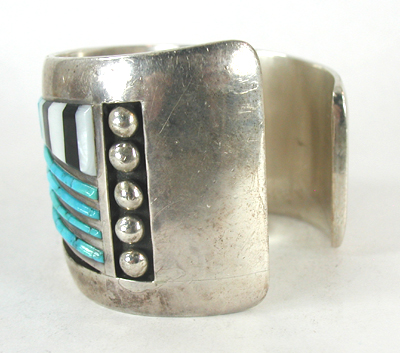
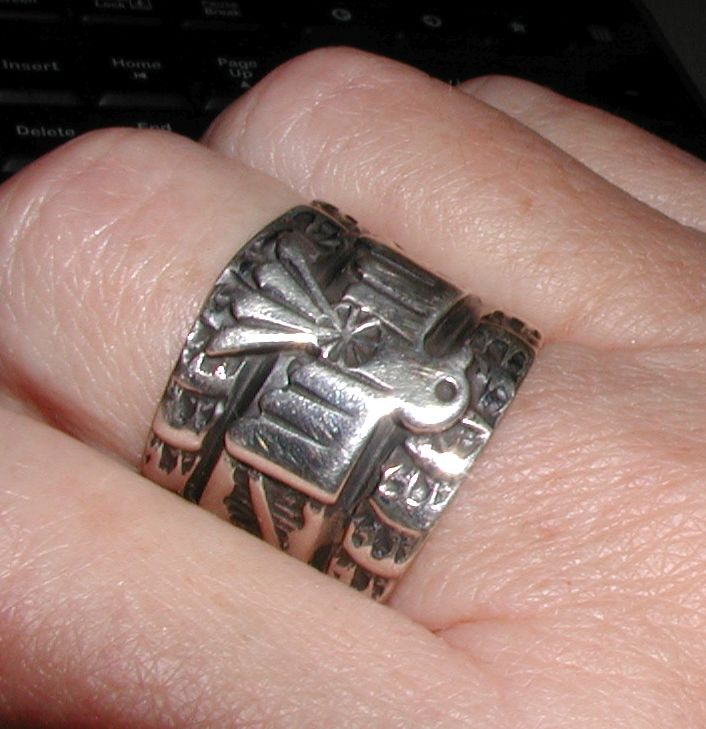
The hummingbird design is a curved and mirrored inlay with an open center suggesting the rapidly beating wings of the hummingbird creating movement. This design originated in Zuni jewelry with silversmith Ellen Quandelacy (1924-2002), who might have been inspired by the rainbird design on old Zuni pottery. Ellen passed the pattern to her son Dickie who in turn taught it to his wife Ellen (Wesely) Quandelacy. Other Zuni artisans have since used this design.
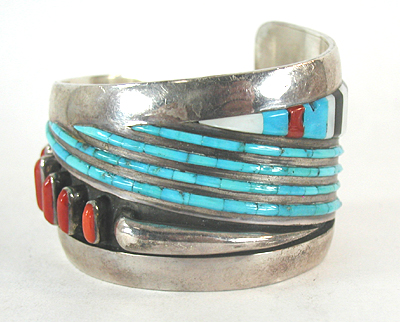
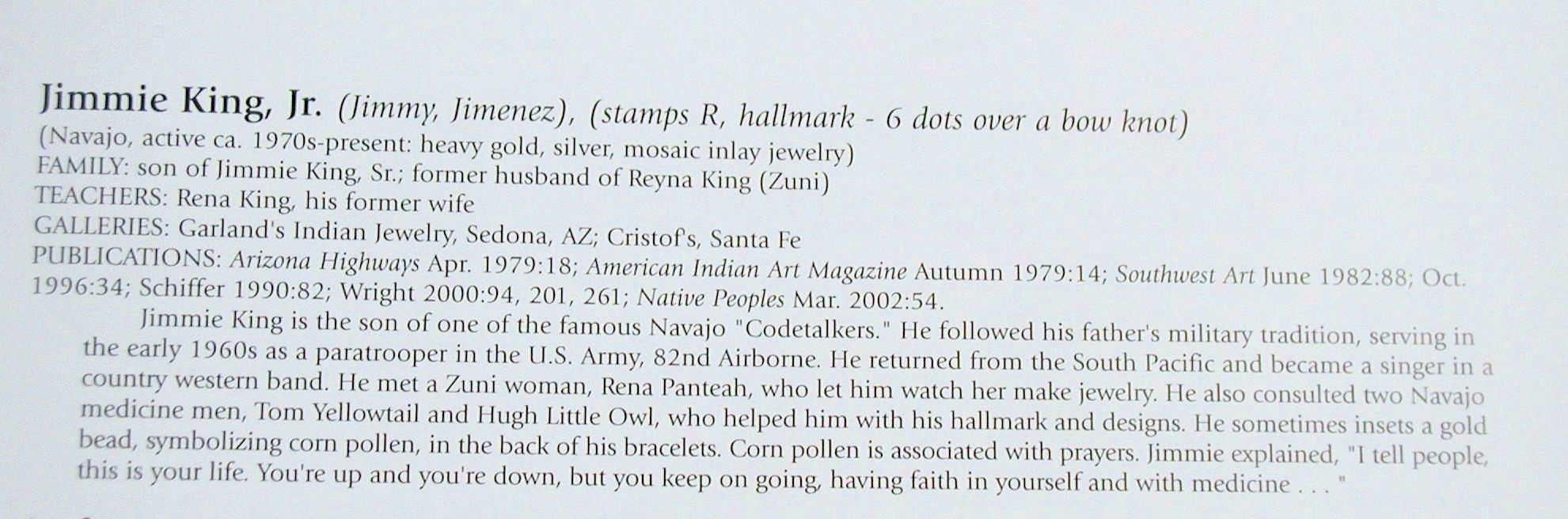
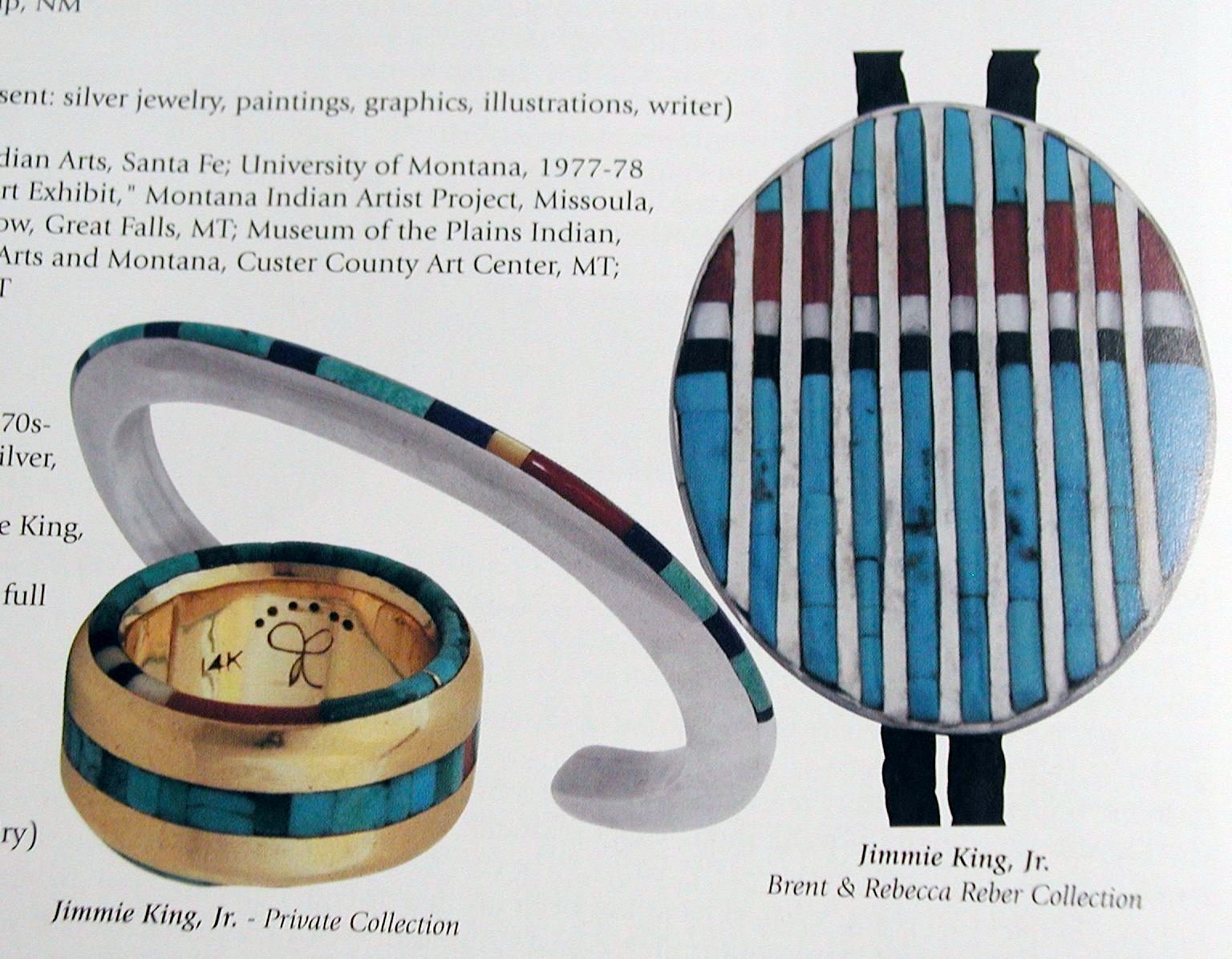
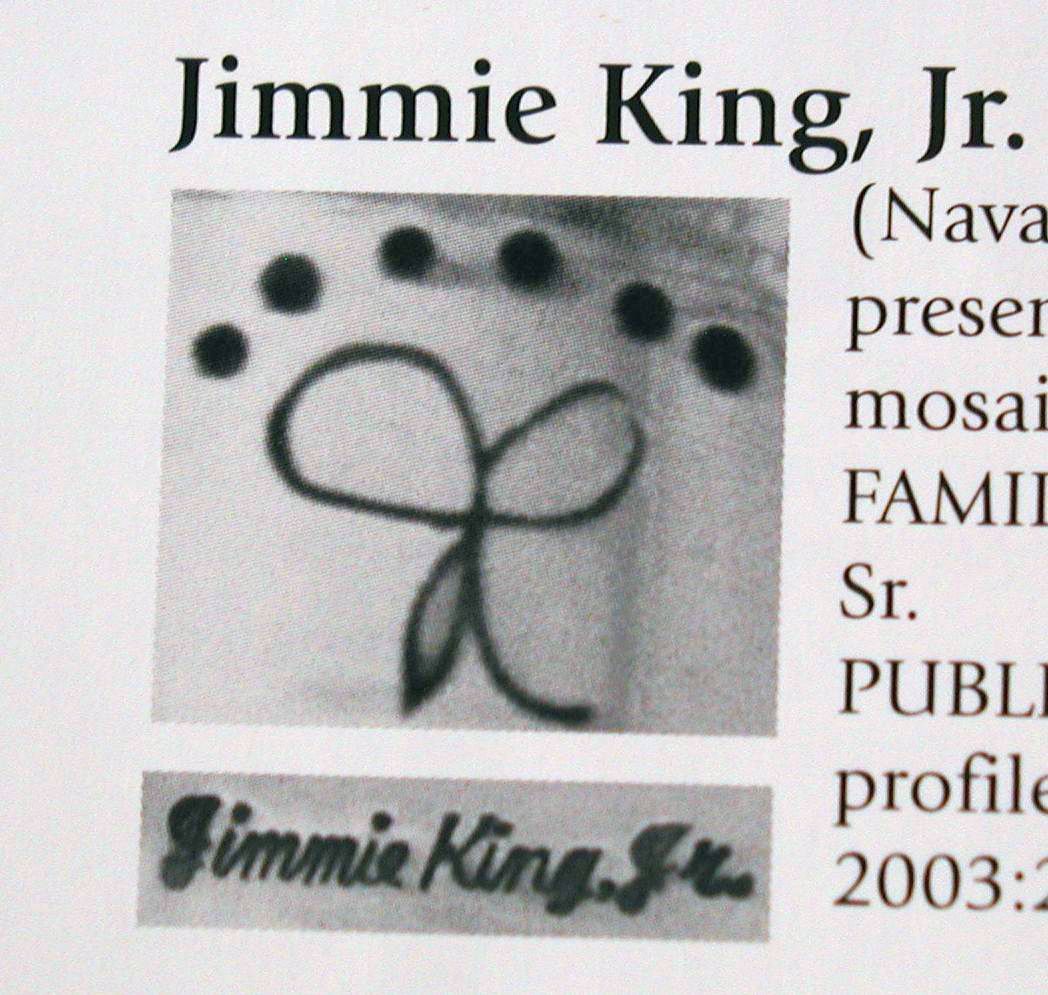
Jimmie King, Jr. has been making jewelry since the 1970s and his work has been featured in a number of publications. See the excerpt below from Gregory Schaaf’s book for a list.
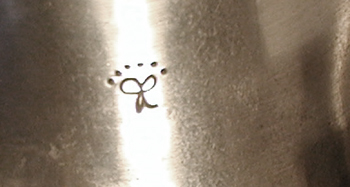
from Gregory SchaafMore pieces by Jimmie King, Jr.Hallmark of Jimmie King, Jr.
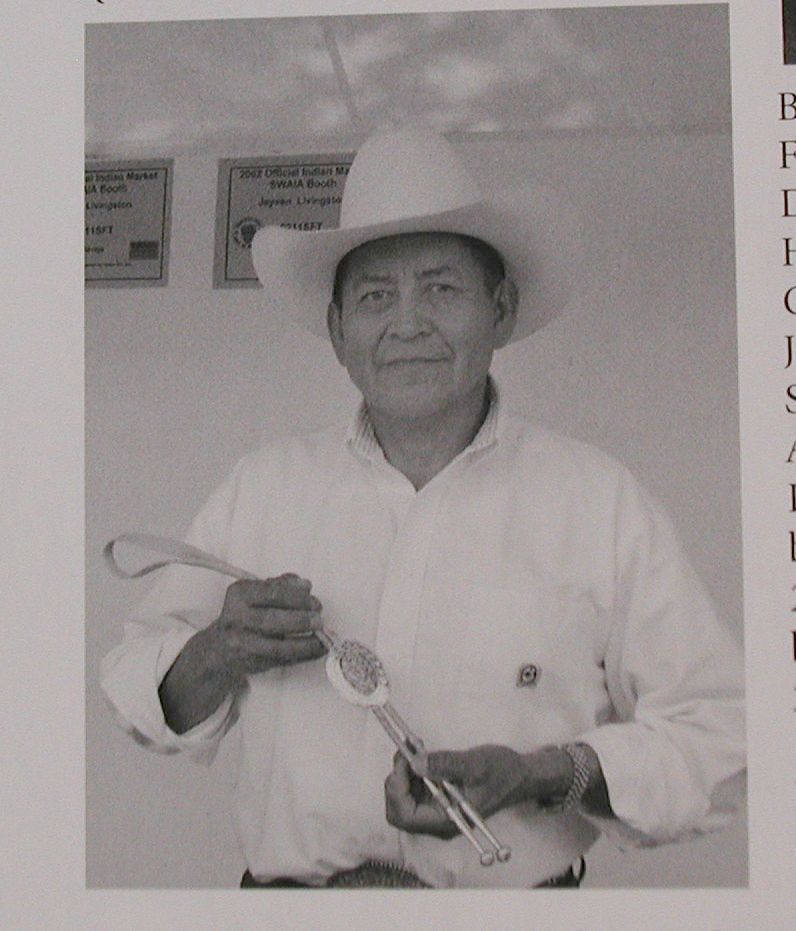
Jacob (Jake) Livingston was born in 1946 in Dine Haven, New Mexico to Jacob Haloo, Sr. and Lolap Haloo. He later changed his name to Jake H. Livingston.
Jake Livingston
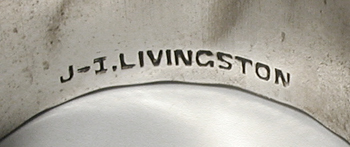
Actively making jewelry since the 1970s, he is a multiple award winner including 1988 IACA Artist of the Year. He has used several marks. The J-I.LIVINGSTON mark includes his wife, Irene Owens Livingston.
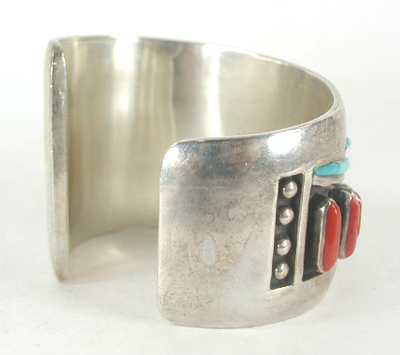
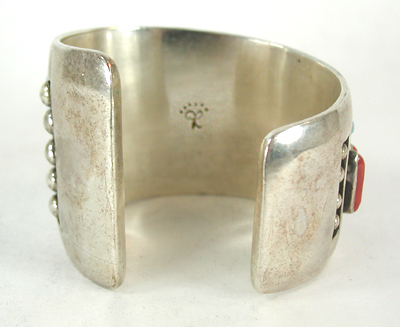
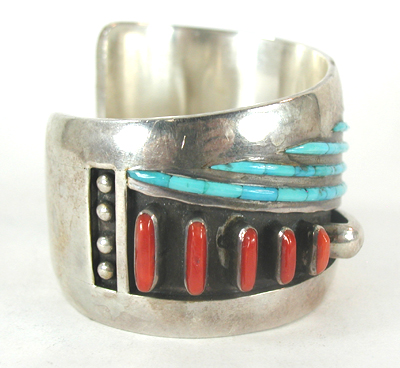
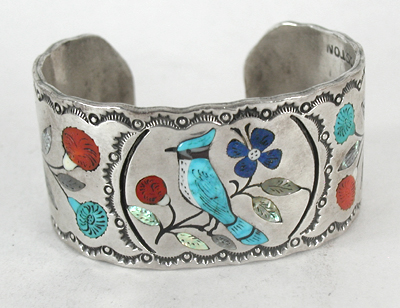
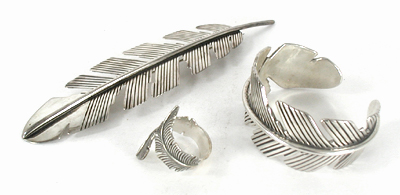
Scroll through the eight photos below to see details of the bracelet and to see more of Jake Livingston’s work as shown in American Indian Jewelry by Gregory Schaaf.
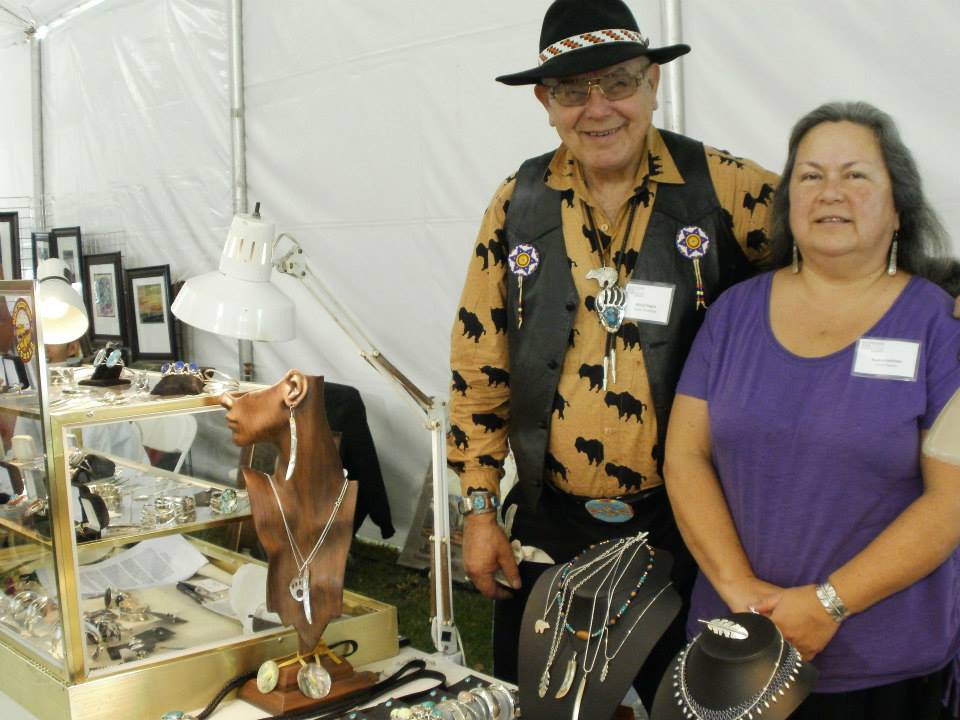
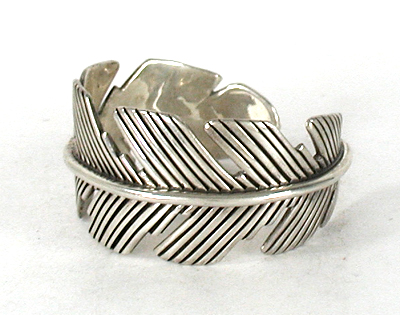
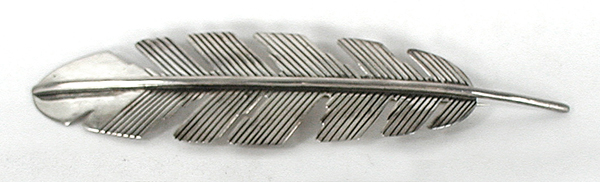
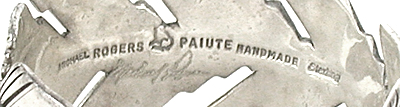
Michael Rogers went to the University of California at Davis, was Chairman of the Bishop Paiute Tribal Council, and has exhibited at the Indian Market in Santa Fe, the Smithsonian Museum of the American Indian in Washington DC, and the Antelope Valley Indian Museum in California.
From the Inyo Council for the Arts : As a child growing up on the reservation, Michael could only make jewelry out of wood with his pocket knife. Now 65 years later, his jewelry is still handmade and fasioned in silver and gold. One of the few California Indian Jewelers with over 40 years of experience, he is a true master of his art.
Bernard Dawahoya began learning silversmithing at age fifteen from an old time smith named Washington Talayumpewa, and from an uncle, Sidney Sekakuku. He continued his education at the Hopi Sivercraft Guild and later worked making jewelry for the Hopi Enterprise shop in Phoenix. When that business moved to Kykotsmovi and changed its name to Hopicrafts, Bernard moved with them and instructed their silversmiths. Around 1971 Bernard started his own shop in Shungopavi and began exhibiting his work at arts and crafts shows. He worked in a variety of mediums and has won numerous awards for his silver overlay jewelry, boxes, bowls, textiles, paintings, Katsina dolls and leatherwork. His work is included in the collection of the Peabody Museum at Harvard
Just buy and pay for your items as usual, then in the note box of the order form enter the item numbers of what you want for free. You can pay with credit card, PayPal and money order (but you won’t get an additional money order discount).
All items on our site qualify for this sale except for the following: They won’t be included in your total and can’t be used as FREE items.
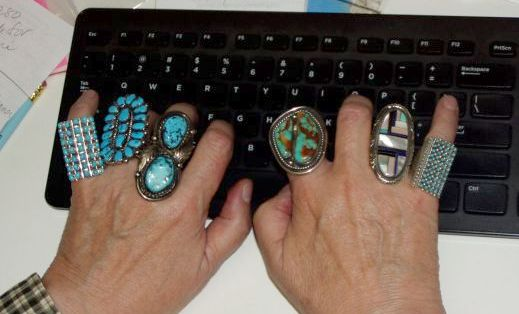
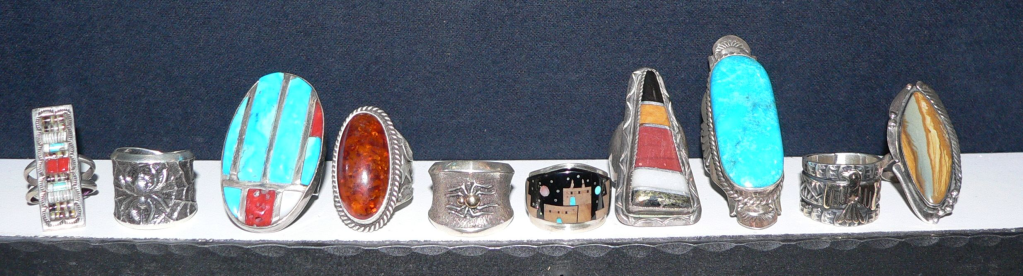
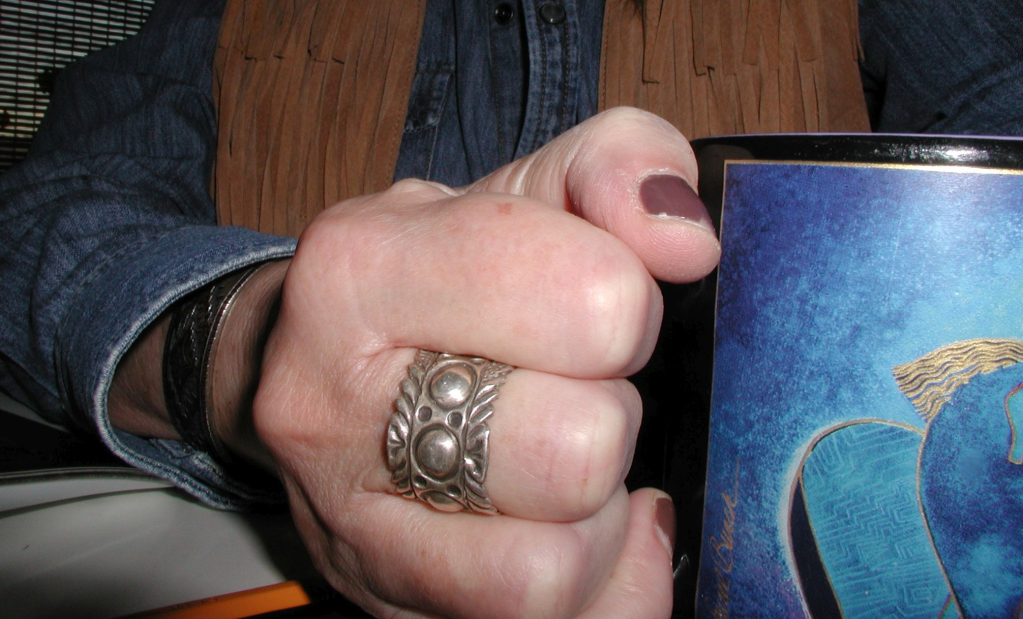
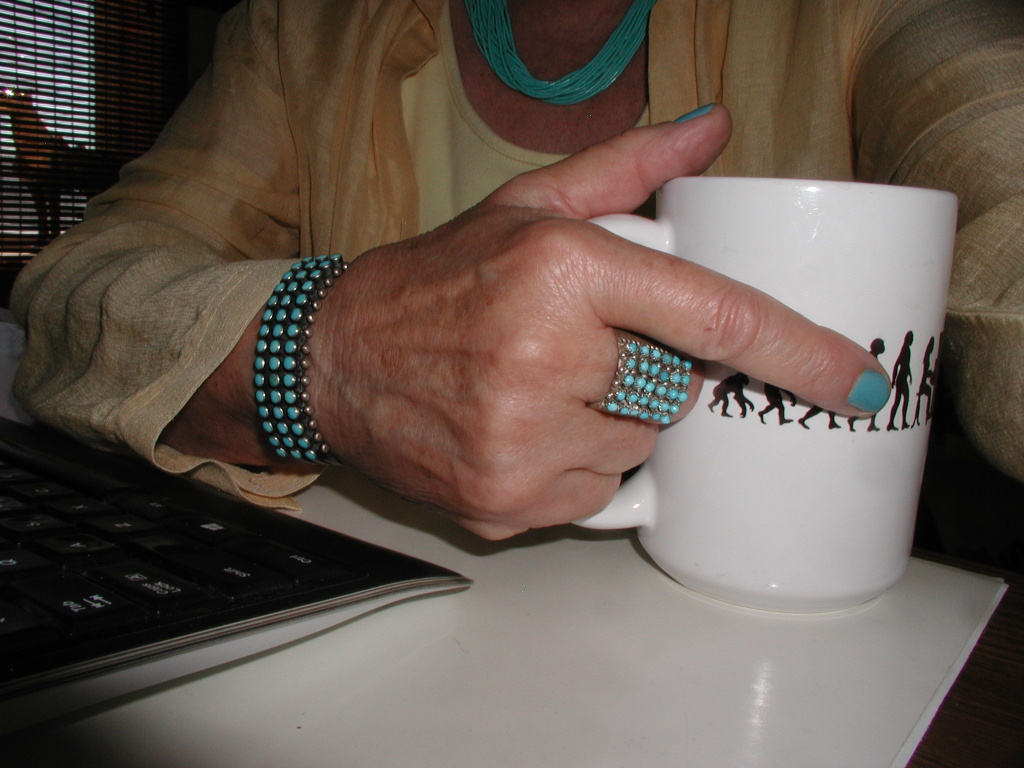
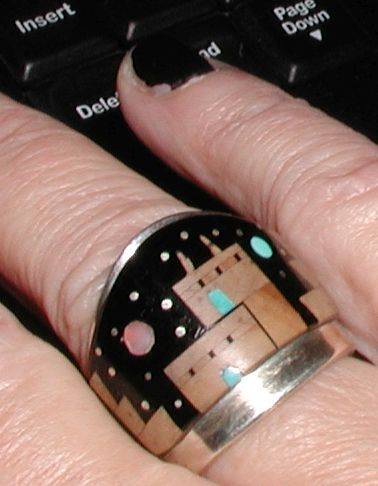
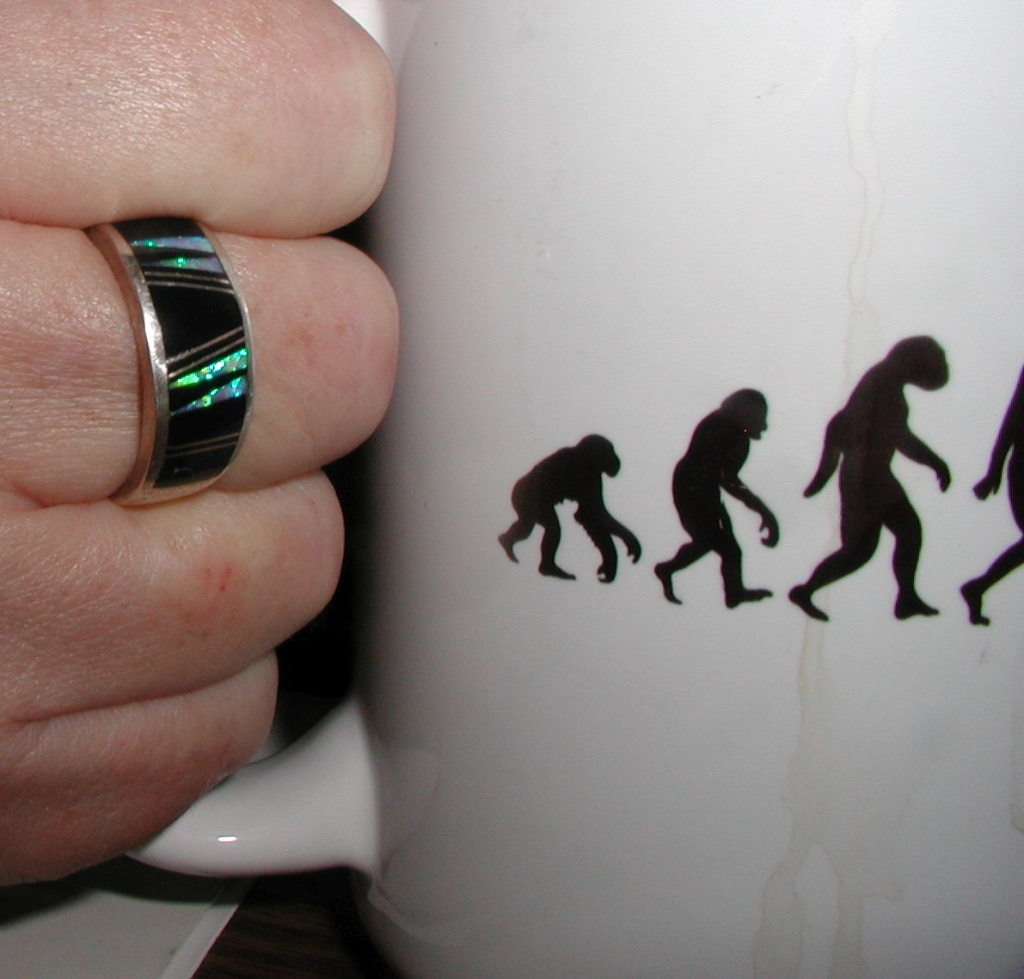
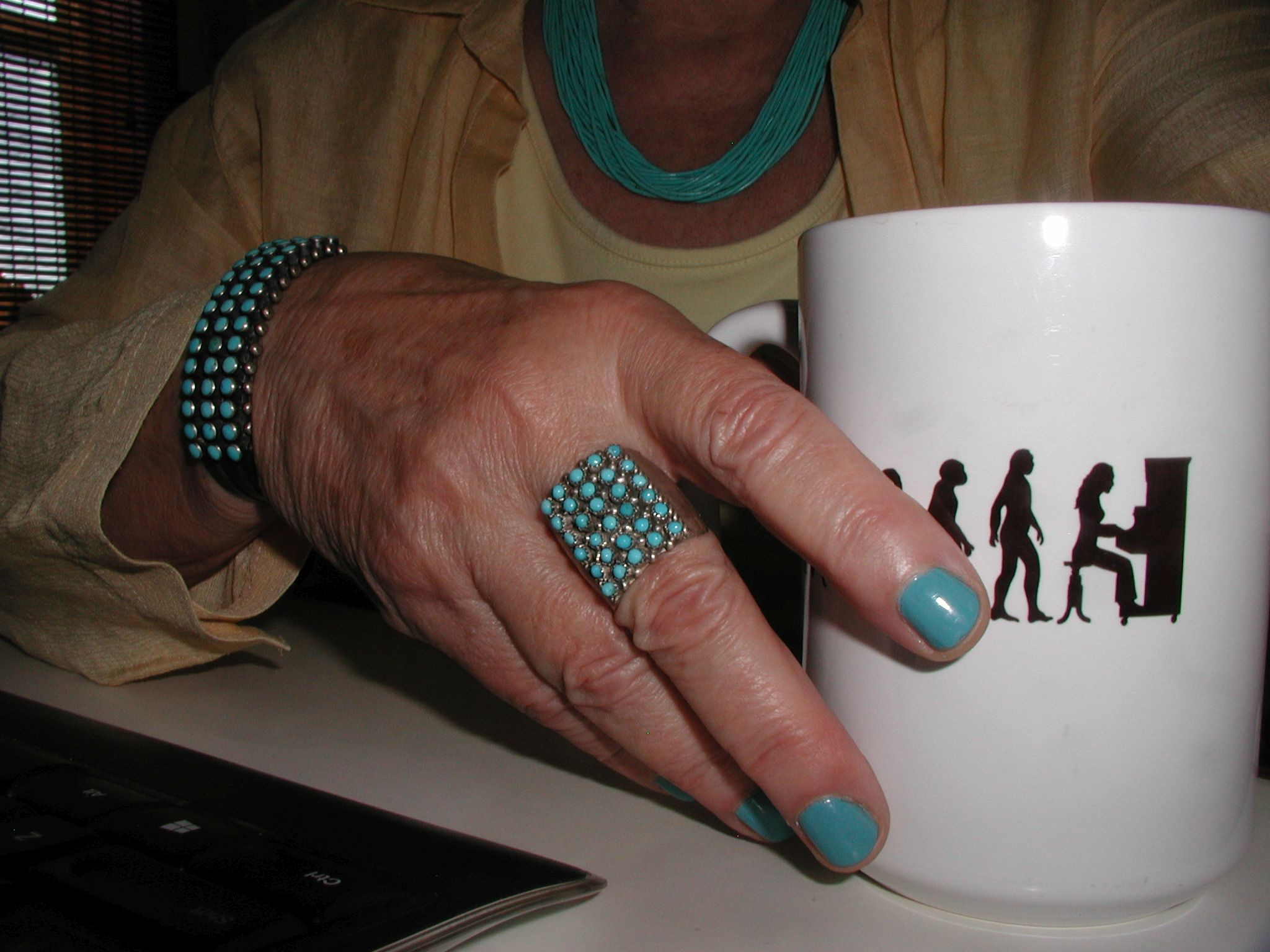
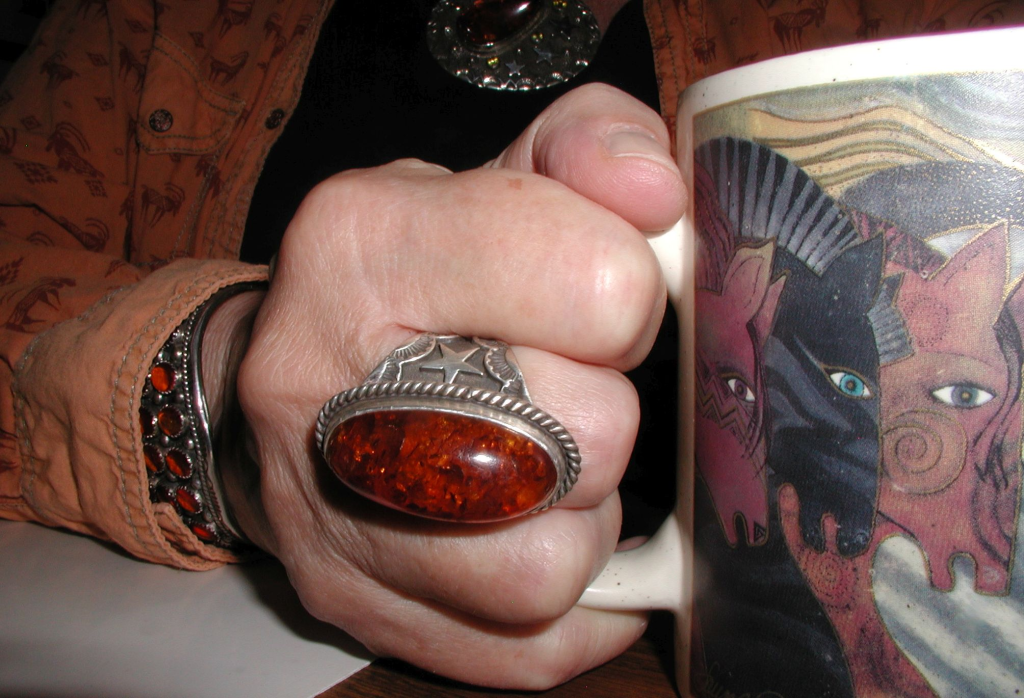
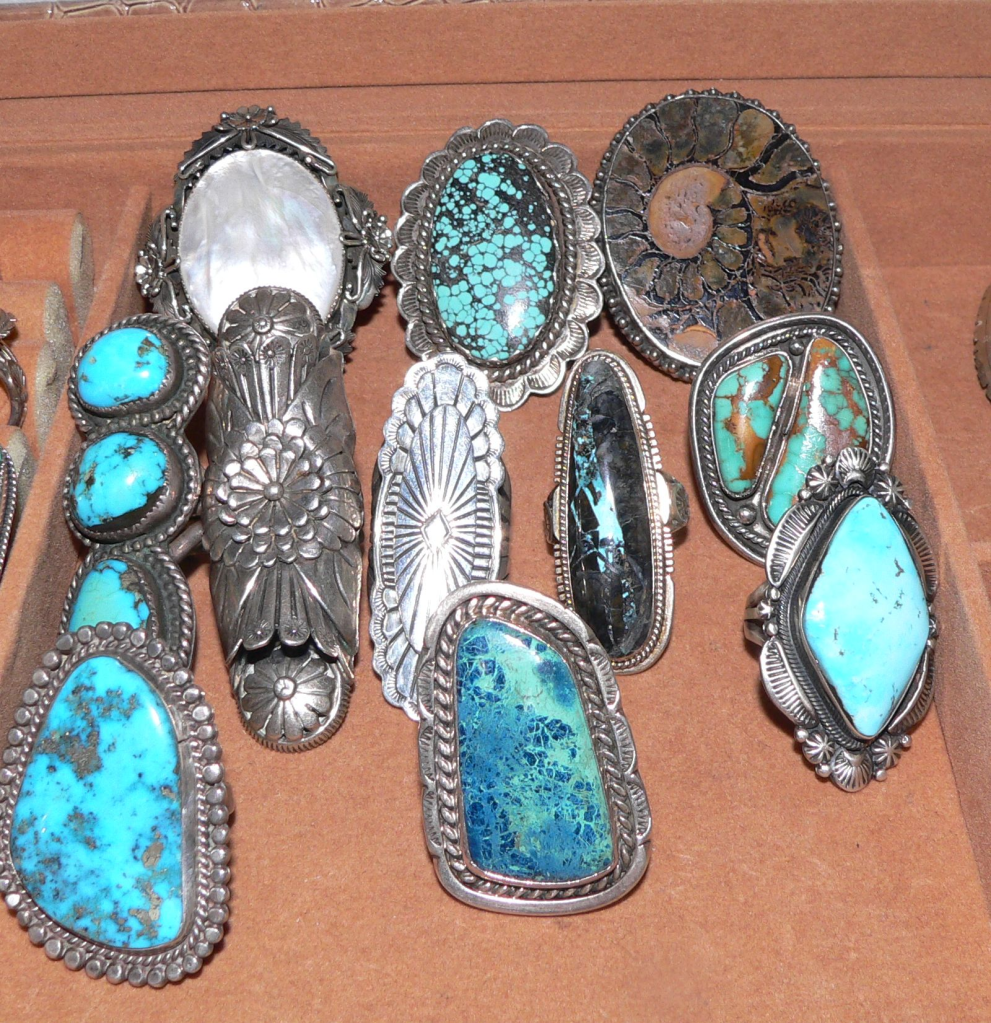
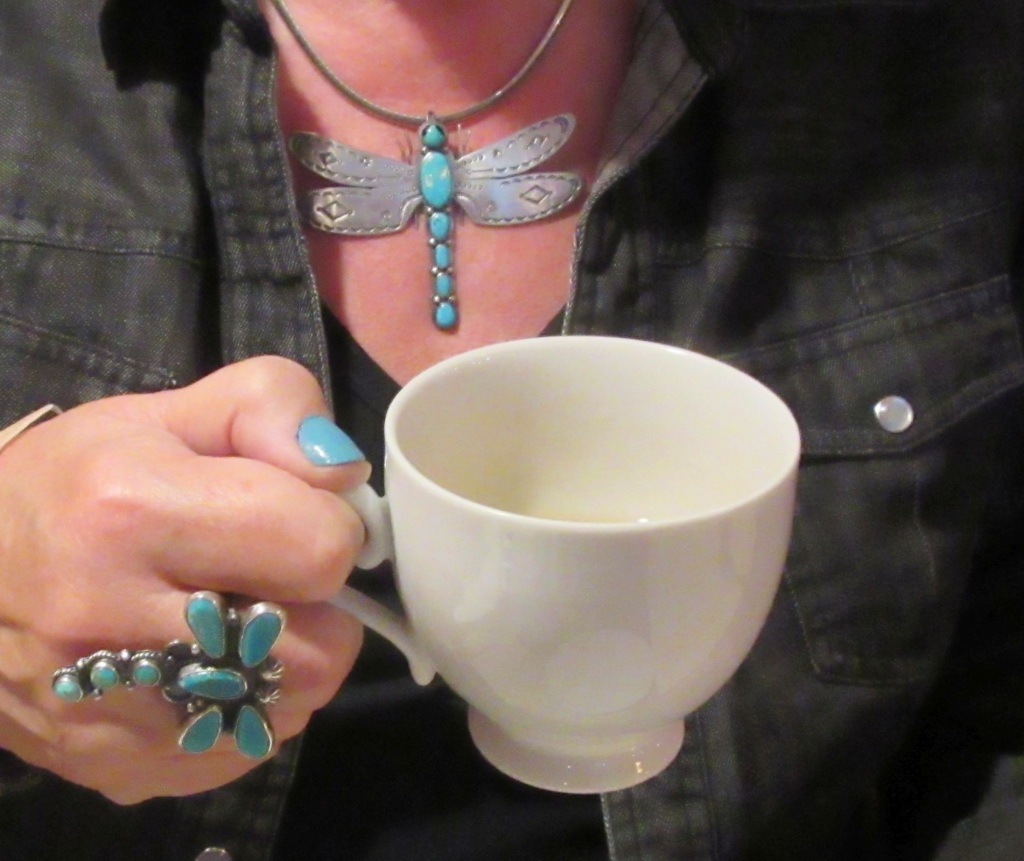
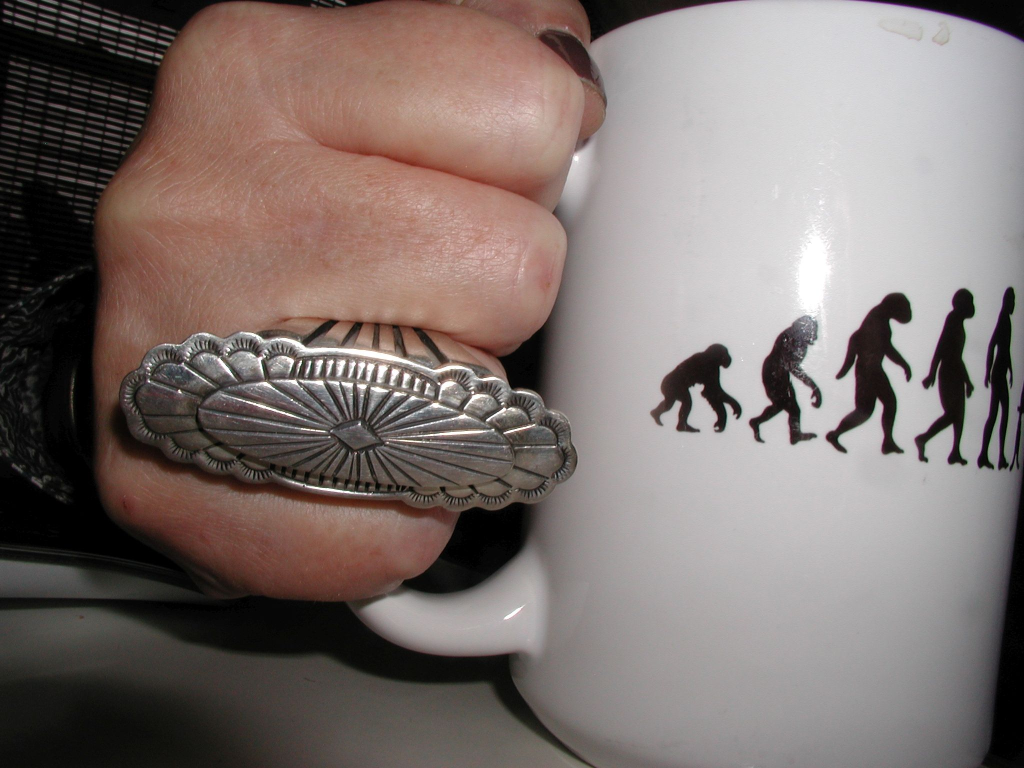
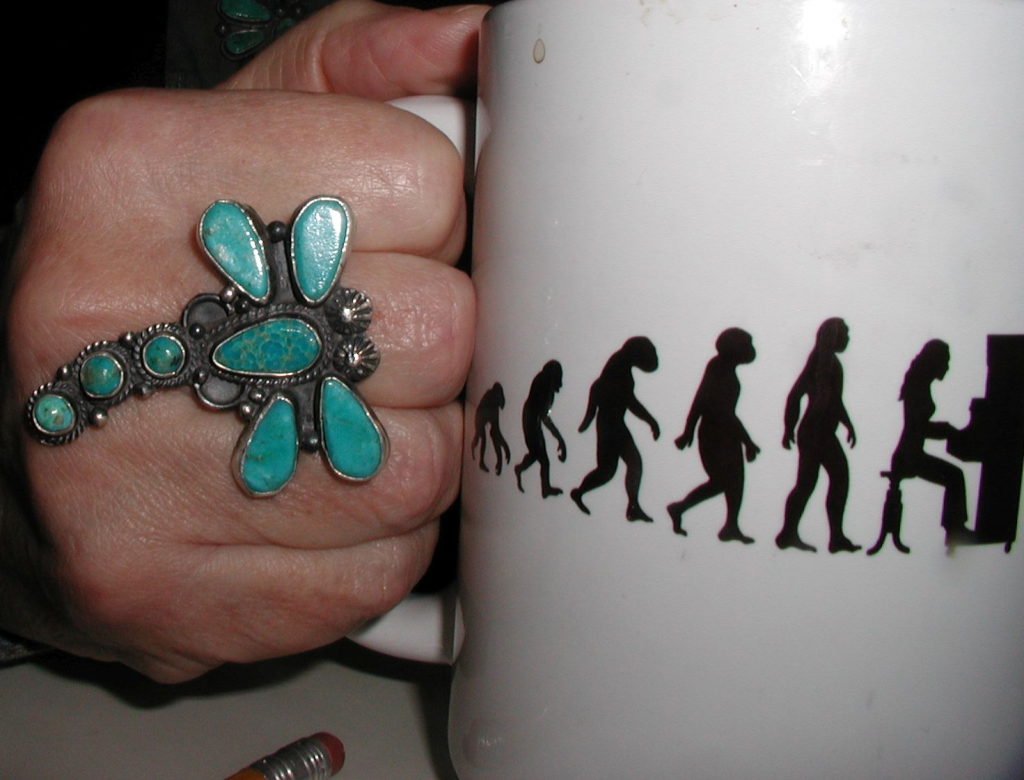
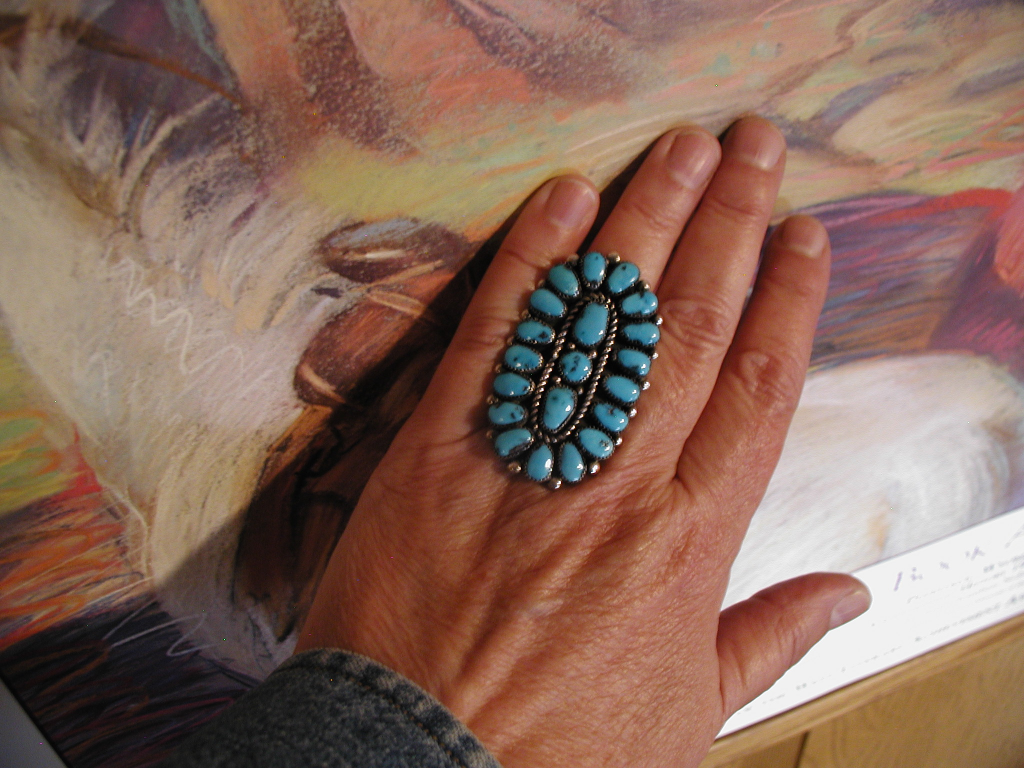
Almost every day I wear one or two sterling silver Native American rings. Some are made solely of sterling silver. Others are inlaid with a variety of stones and shells or adorned with turquoise and other precious stones. For me, its important to pick the right ring for what I have lined up for the day or night.
Although the rings in these photos are my personal rings and not for sale, if you click on the photos, they will take you to pages of similar rings that are for sale at the Horsekeeping webstore.
Rings for all occasions………….
First of all, because I support Native American artists both contemporary and past, I try to only wear rings that are Native American made by enrolled members of Indian tribes in the United States. The rings I wear are either Navajo, Hopi, Zuni or Lakota made.
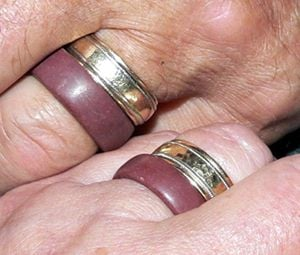
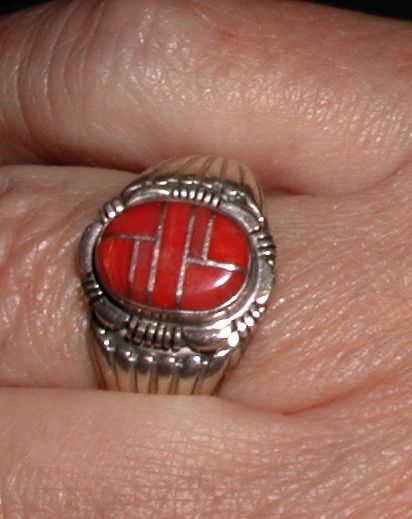
The two blood red stone rings were made from pipestone/catlinite quarried from Pipestone National Monument by a 5th generation Lakota pipe maker. He gave them to us for our anniversary.
Sometimes with vintage rings it is hard to tell who made the ring because it was not common to sign or stamp a hallmark on Native American jewelry until relatively recently.
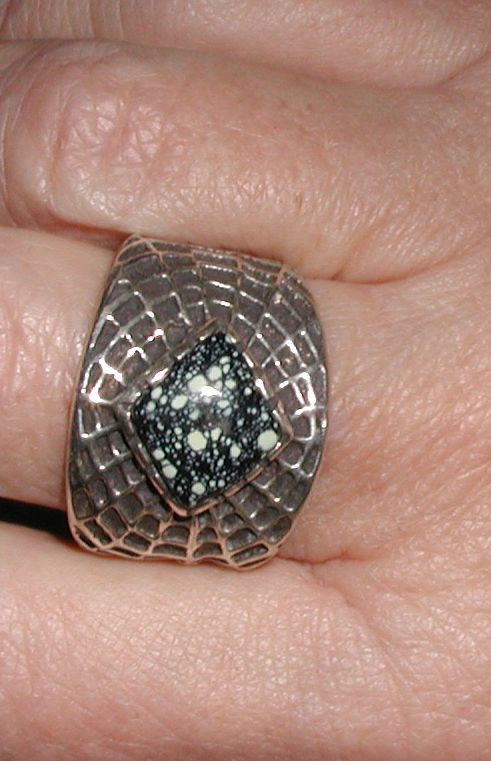
This vintage ring is unsigned
RANCH WORK
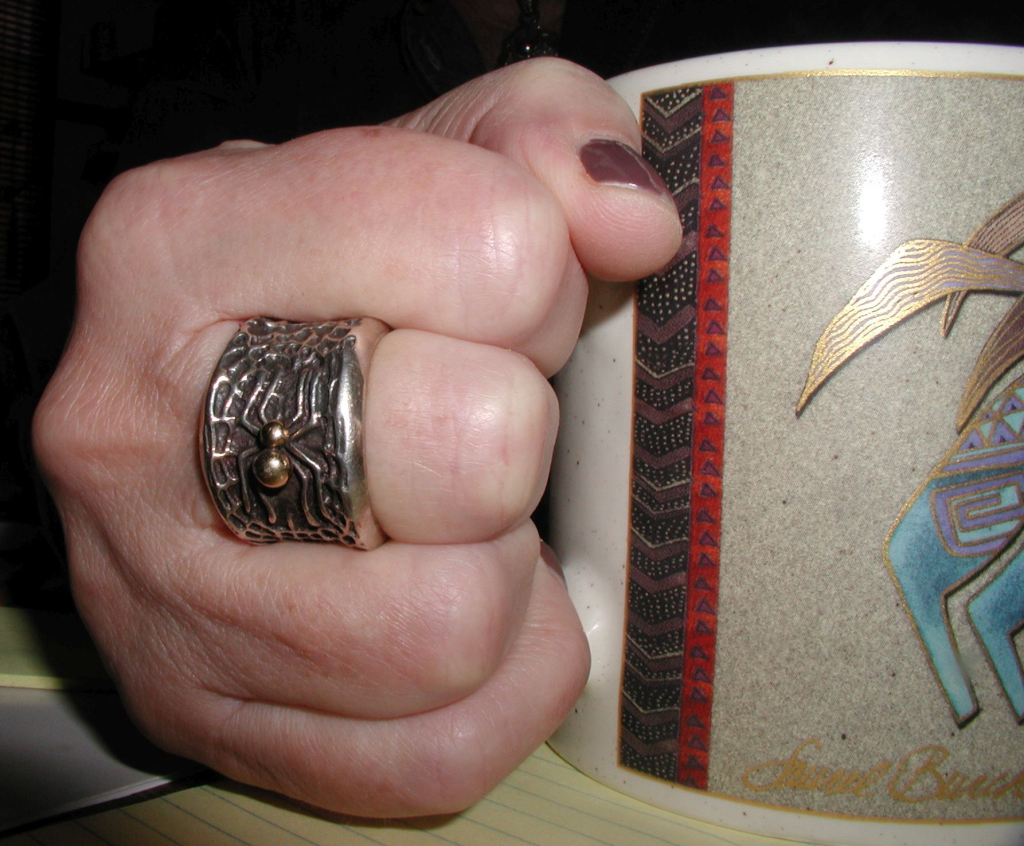
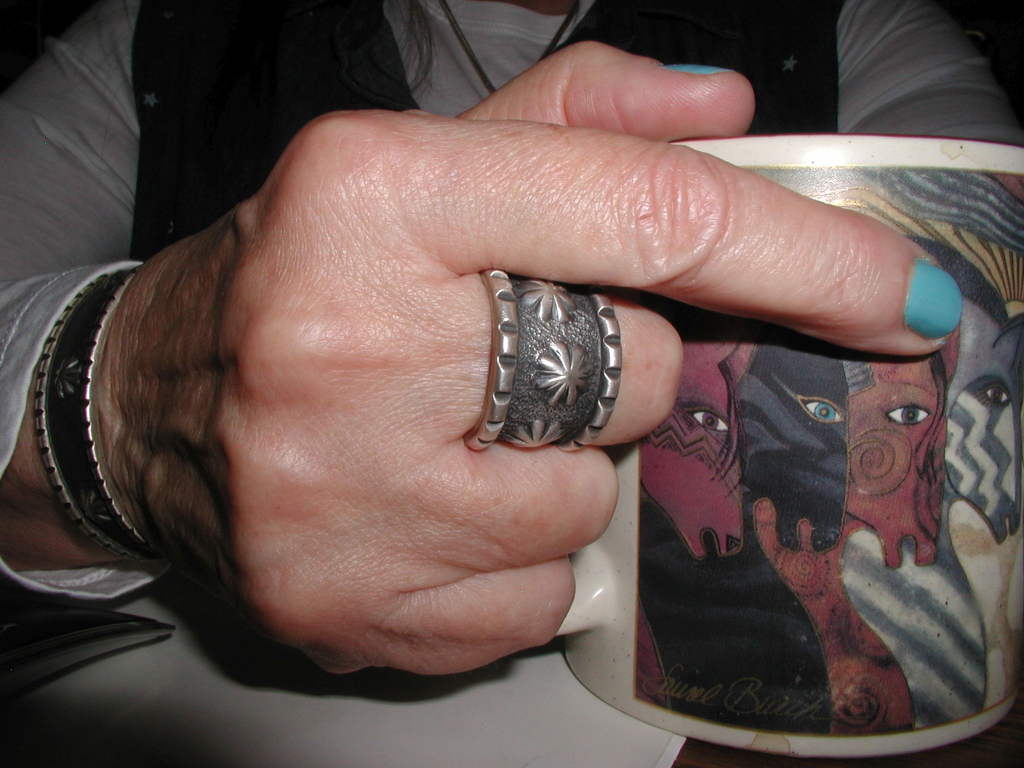
One factor that affects which ring I will wear is that I live on a ranch. When I am going to be outdoors or working in the barn near metal panels, banging gates, handling ropes, reins and such, I opt for simple rings such as a well-fitting silver band.
Philander Begay, Navajo
When wearing a simple silver band, there is very little that could get caught and rip my finger off. Plus, by not wearing my stone or inlay rings around the barn, I run a much smaller risk of cracking the stones.
Sterling rings are safe to leave on when I wash my hands, something I do quite a bit up at the barn. So here are some of the ranch rings I wear. As you view these photos, remember that coffee is one of the essential fuels on a horse ranch.
Monty Claw, Navajo
Sunshine Reeves, Navajo
Calvin Martinez, Navajo
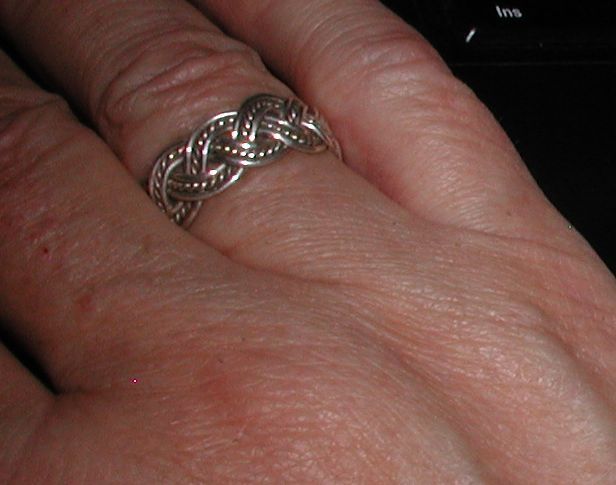
Sterling braids like a horse’s tail. Maker unknown.
Wilbert Benally, Navajo
OFFICE WORK
When I am at work at Horsekeeping, the Native American Jewelry webstore, it basically involves sitting at a desk typing, taking photos of jewelry, pulling items to fill orders and the like. My office ring options are much broader.
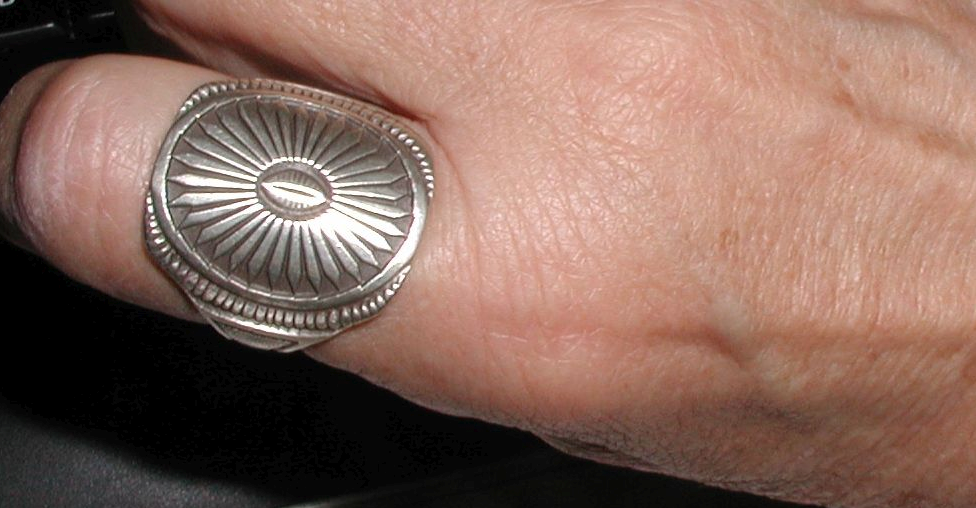
Zuni Snake Eye ring by the Haloo family
Still, though I usually wear moderate rings to work, I don’t wear rings that are too huge or have prominent features. Since many of my “work day” rings have stones, inlay, petit point or needle point, I made sure to remove rings before I wash my hands because getting stone rings wet can do a couple of things, all bad.
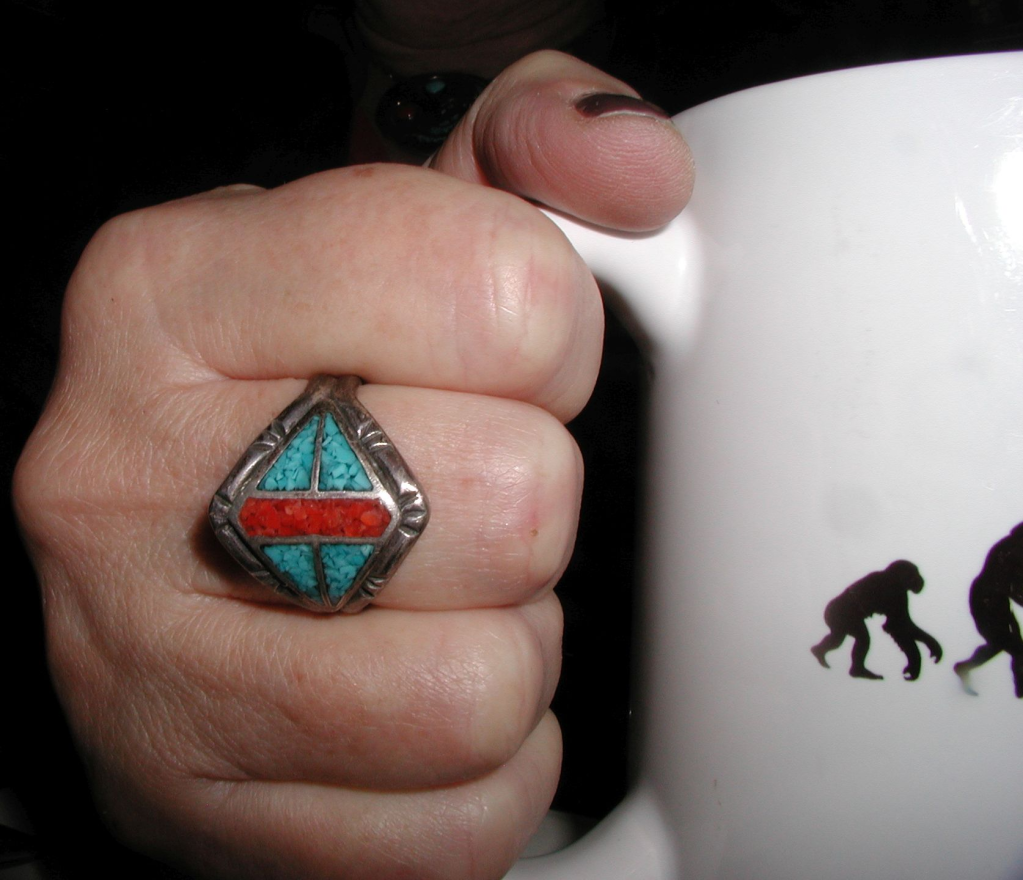
Unmarked vintage chip inlay ring
First of all, with repeated wetting and drying, the adhesive behind inlay rings can become softened and eventually let go of the stonework.
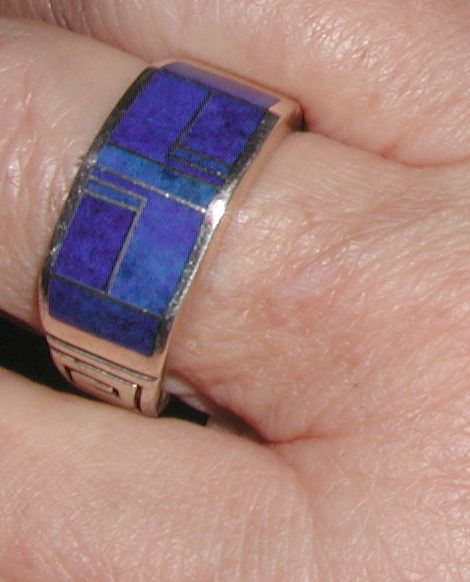
Contemporary Lapis Inlay Ring
I’ll never forget the customer who said “After I washed my hands in a rest area just like usual, I watched my turquoise inlay slide down the drain.” No comment.
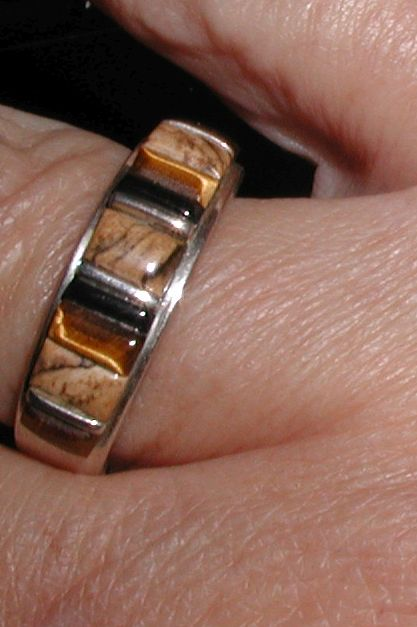
Contemporary Tiger Eye and Jasper Ring
Inlay Ring by Merle House, Navajo
Contemporary Jet and Imitation Opal Ring
Contemporary Inlay Ring
Contemporary Coral and Sterling Silver Channel Inlay Ring
With stone settings, since most are backed with sawdust or another shock absorbing material, getting them wet will cause that material to swell and push the stone upward, putting pressure on the bezels which often let go of the stone.
Again, a customer, “After I took a shower, the stone just popped out.” Ah hah.
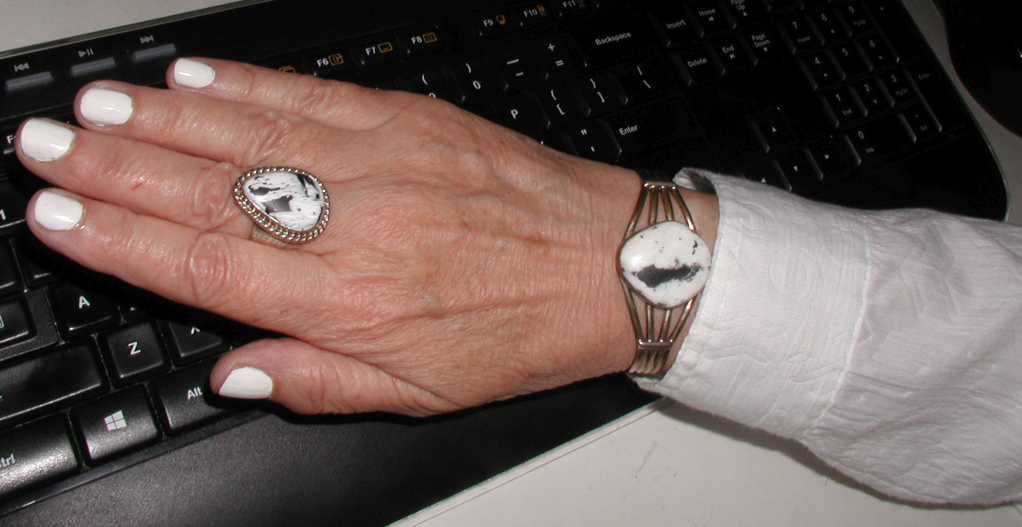
White Buffalo Stone Ring by Tony Garcia
Philander Begay, Navajo
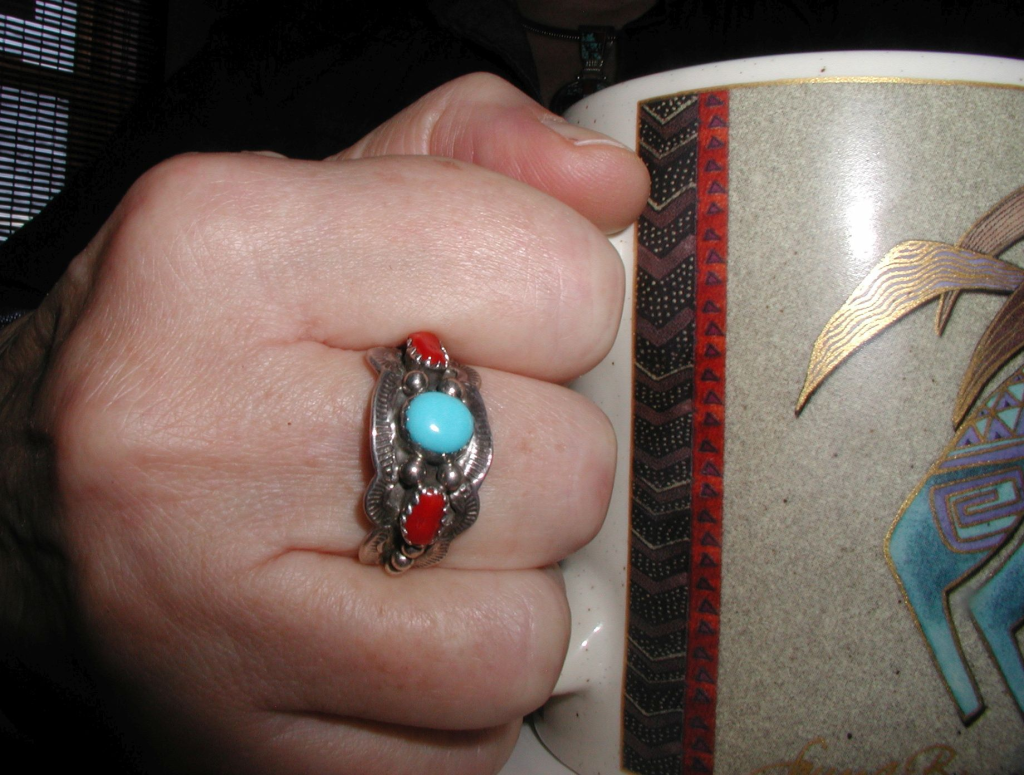
Turquoise and Coral ring hallmarked RB
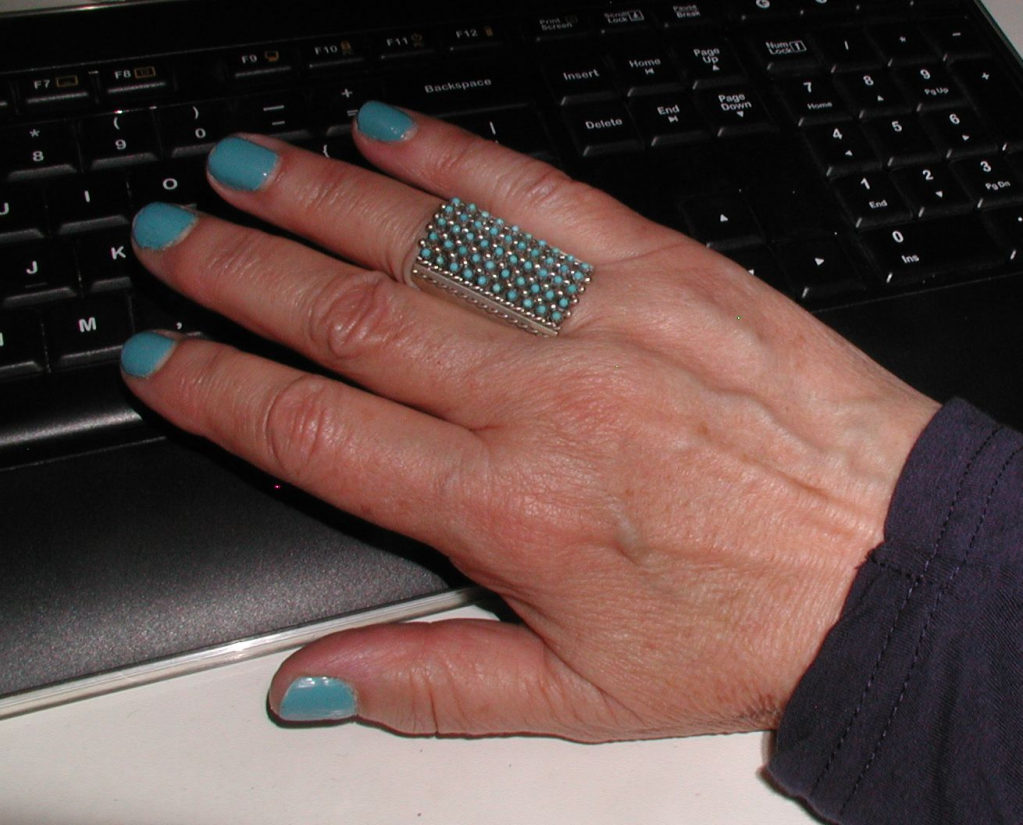
Micro Snake Eye Ring by Jason Amesoli, Zuni
Custom Made Amber Ring by Henry Yazzie
COCKTAIL RINGS
The final category is date rings AKA cocktail rings. For that special night out when all you have to do is lift a fork or a glass.
Date Night Selection
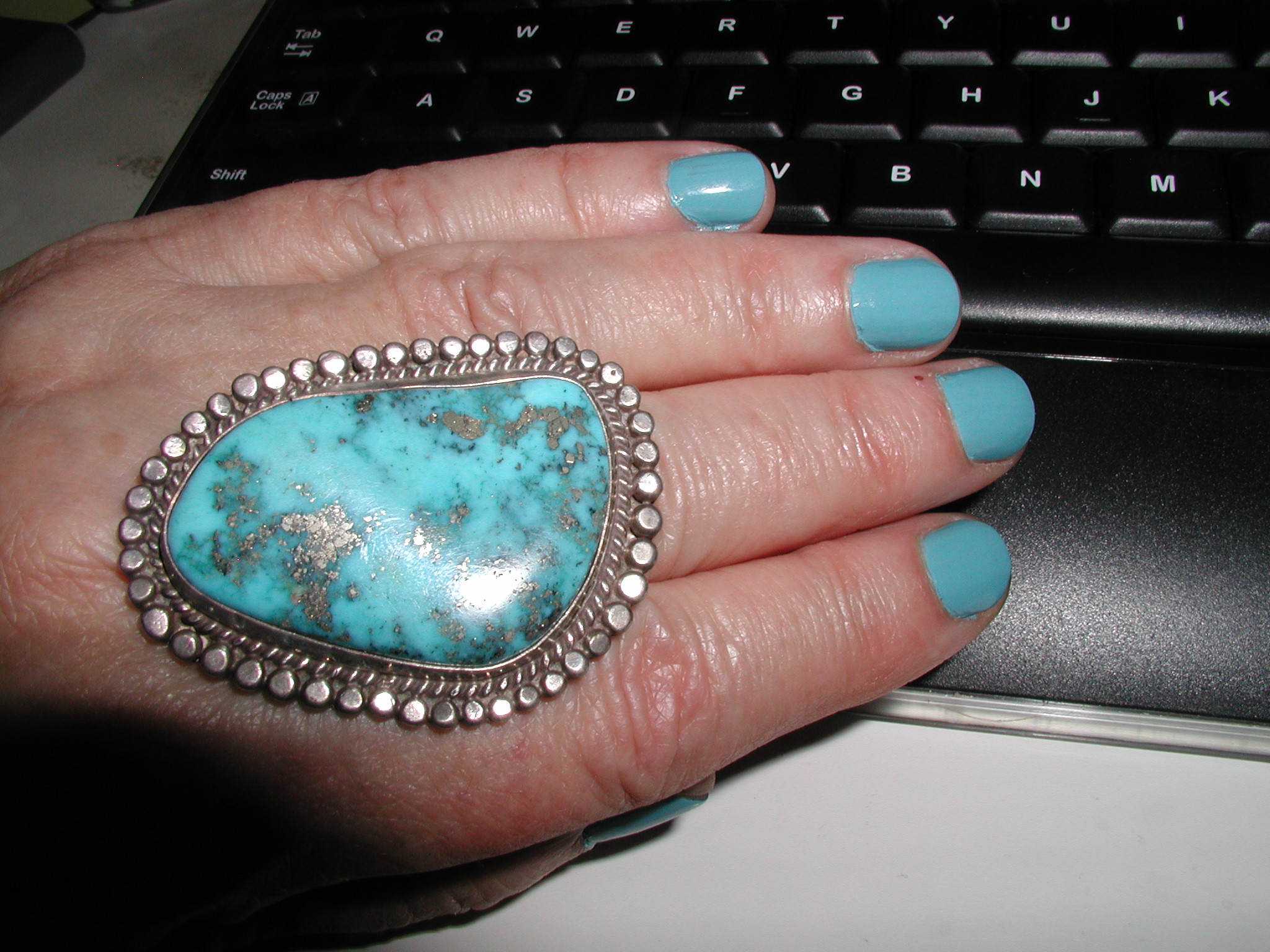
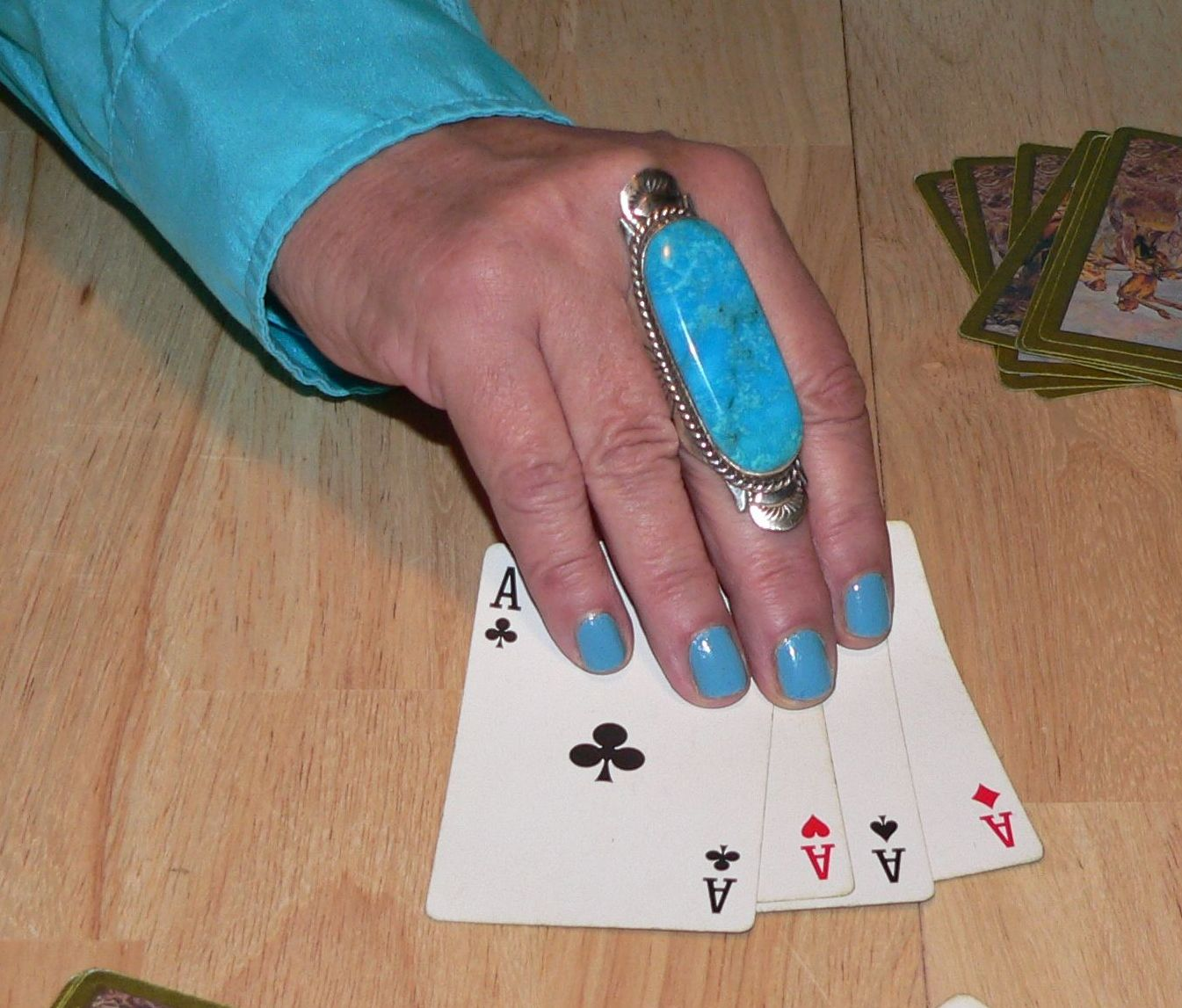
Cocktail rings are those unique creations that are saved for special occasions when you are just plain showing off. Often large and worn on an index or middle finger, these rings look great whether you are picking up a cup of tea or a glass of whisky. The big bad boys just call out for your date and others in the area to check out your hands and your fabulous Native American made ring.
Tyler Brown, Navajo
Hallmarked RB
Tyler Brown, Navajo
Cluster Ring by Robert and Bernice Leekya, Zuni
Choose an authentic Native American made ring and you’ll always have a winning hand.
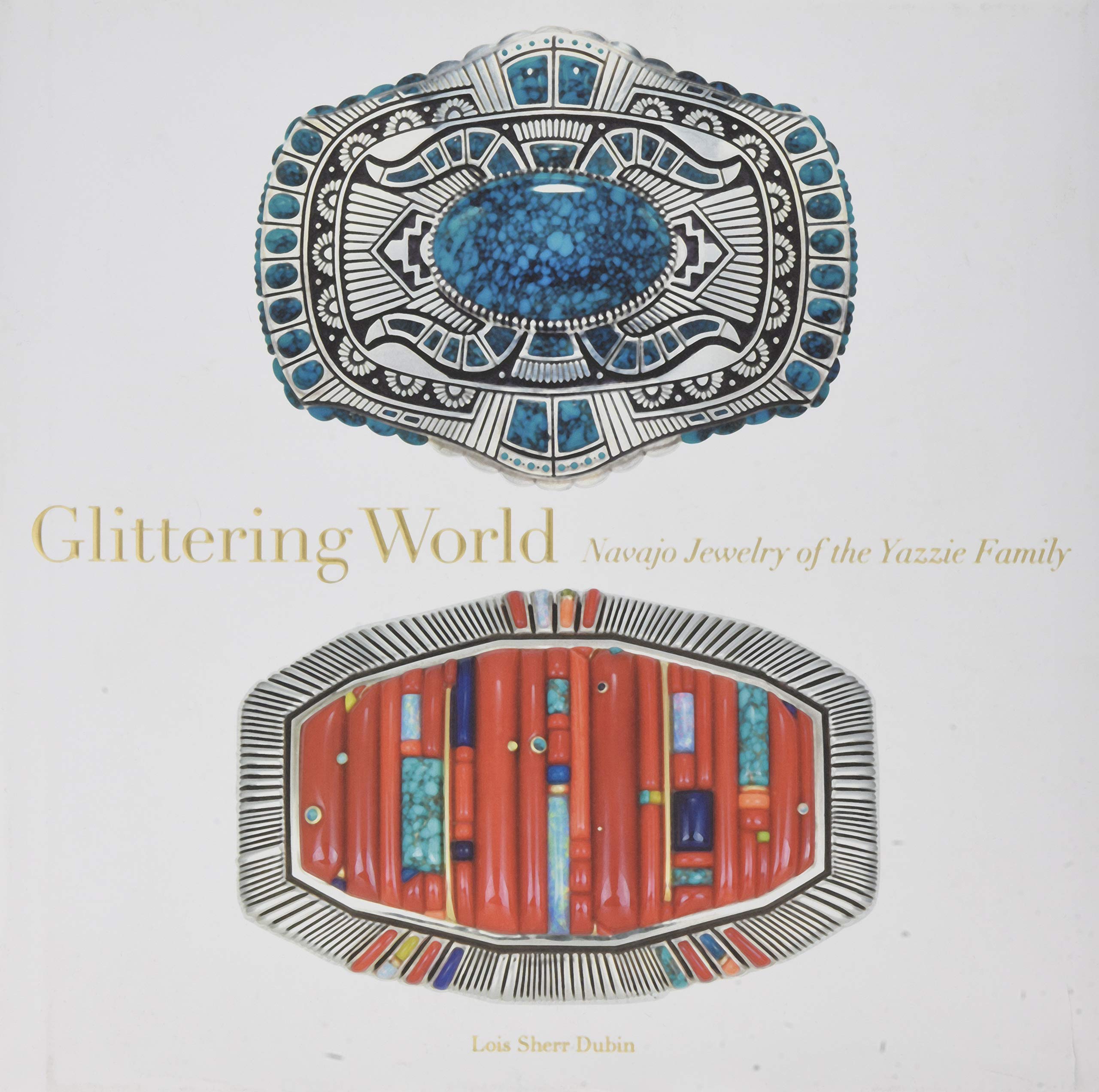
The breathtaking, large and very detailed photographs is this coffee table style book make you feel like you are almost holding the jewelry. The sumptuous pieces are captivating. I’ve spent hours paging back and forth through the beautiful work, drooling over the buckles.
9 3/4″ x 9 3/4″
Hardbound with dust jacket
272 pages
Full color
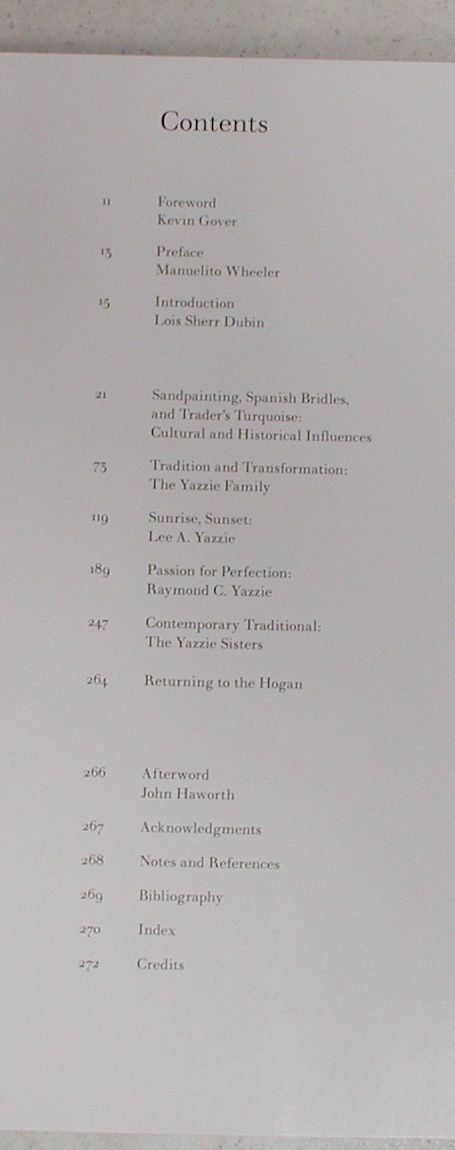
There are many outstanding Yazzie jewelers. Because the subtitle uses the phrase “Yazzie Family” I expected more Yazzie artists to be included. However, this book mainly focuses on the life and work of brothers Lee and Raymond Yazzie. There is a good deal of text about the family, design, techniques and materials.
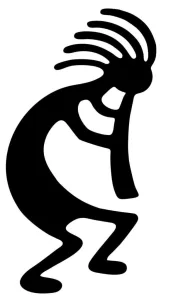
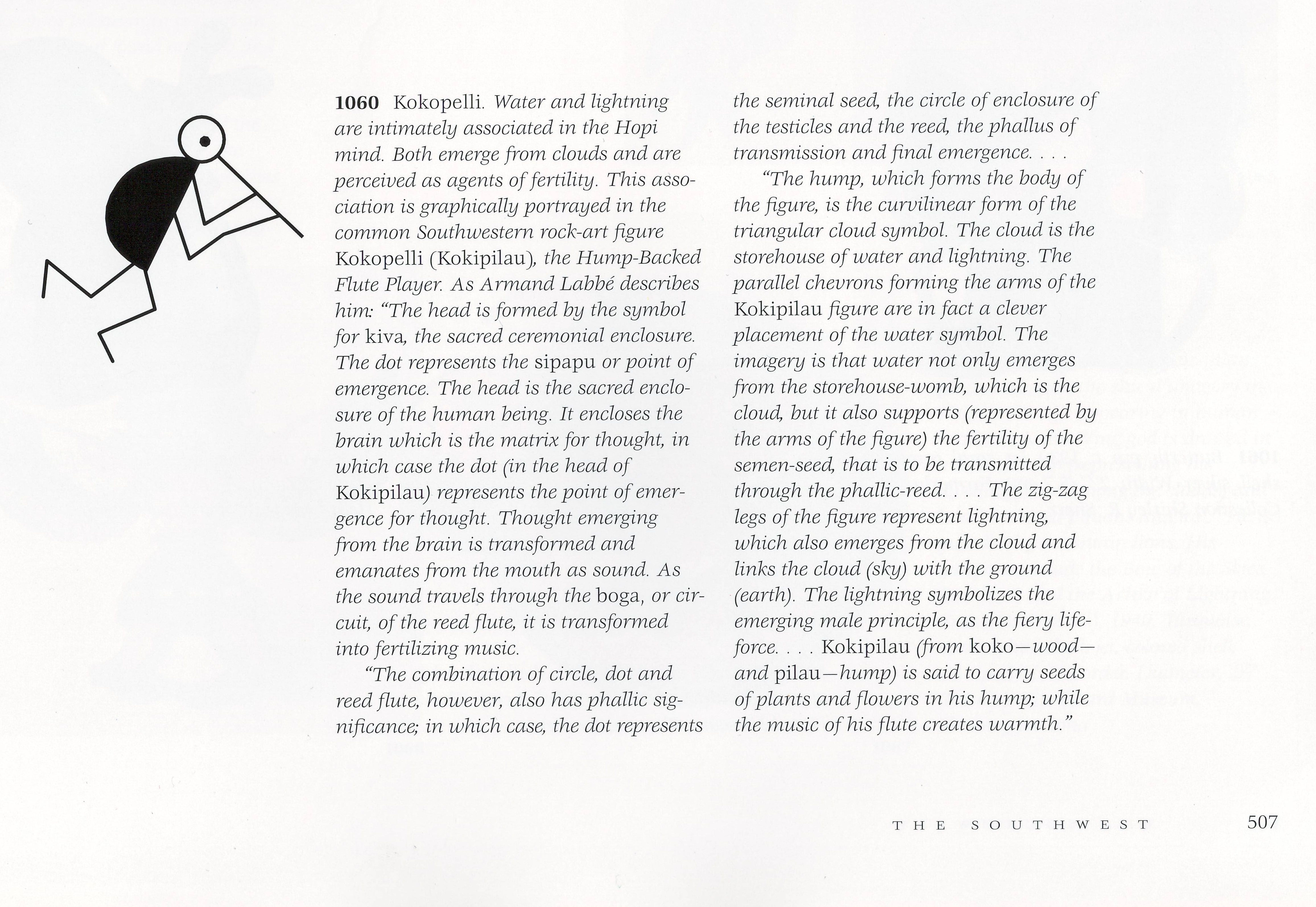
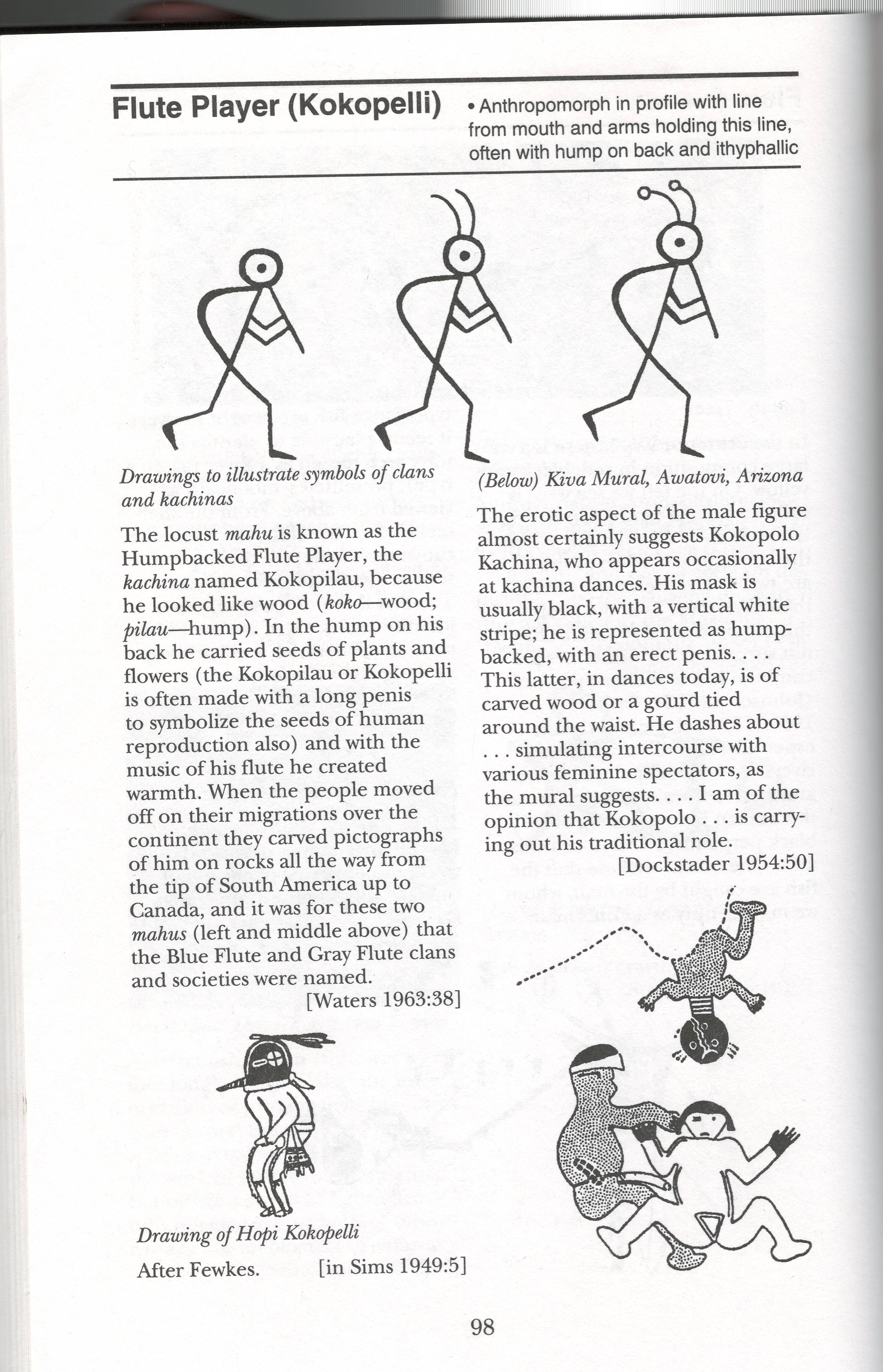
Kokopelli is based on the Hopi word KOKOPILAU KOKO = WOOD PILAU = HUMP
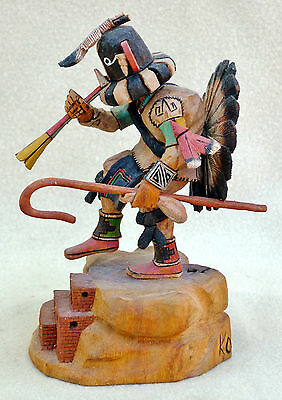
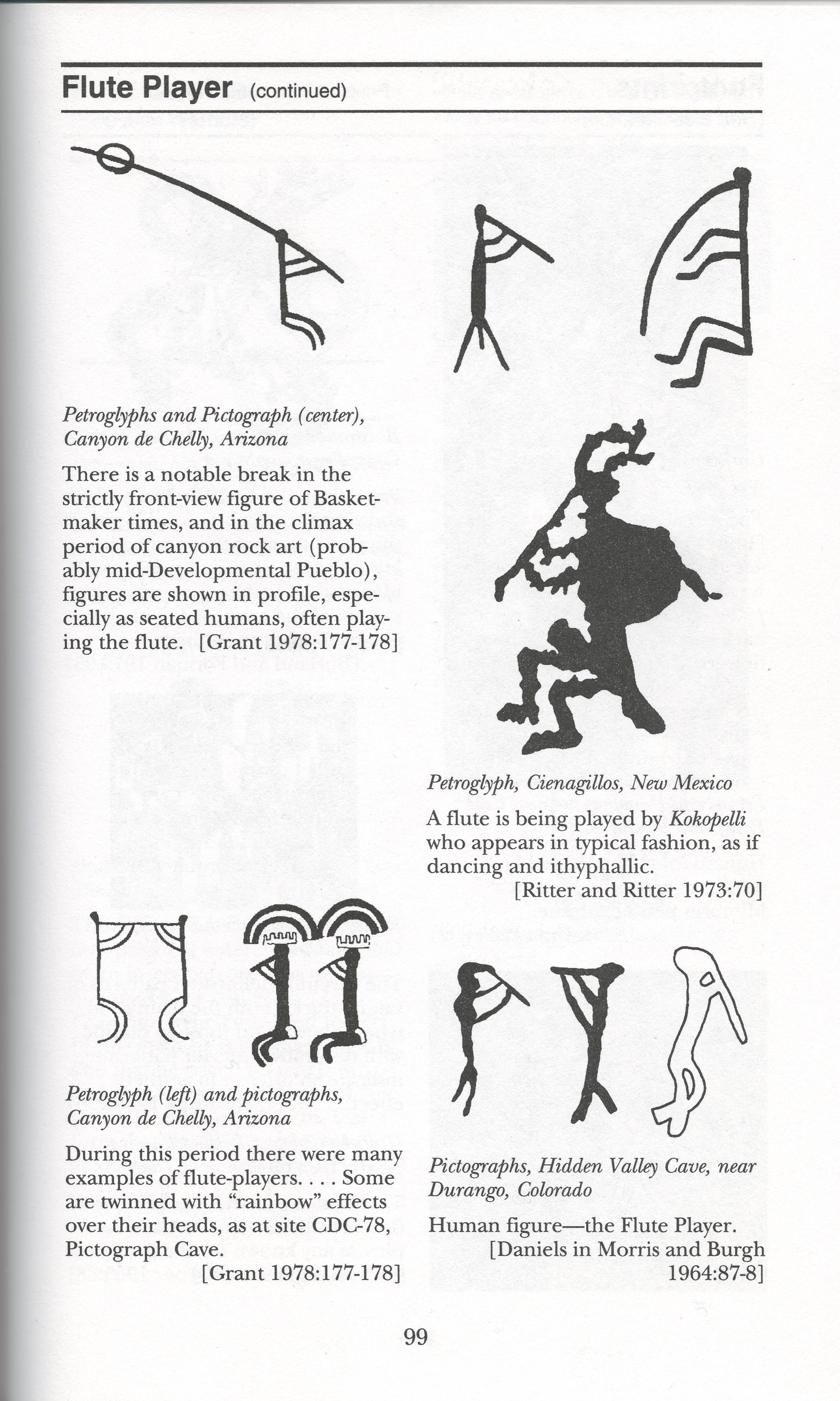
The kokopelli, flute player, often associated with the Hopi Flute Clan is the symbol of happiness, joy and universal fertility: humans, crops, domestic and wild animals. He is often a part of rituals related to marriage, conception and birth and has been a part of the Ancient Pueblo Peoples since Hohokam times (AD 750 – 850). The Kokopelli is a presence in Hopi legends and can appear in in ceremonies as a kachina (katsina). See the slide show below for examples.
This slideshow requires JavaScript.
Kachinas, supernatural spirit beings, are called “katsina” by the Hopi and “Koko” by the Zuni (which means “raw people”). Kachinas are associated with rain and other good things such as longevity, strength and good fortune. Kachinas serve as an intermediary between the people and the gods to bring blessings to the entire universe.
Today depicted as a non-gender figure, kokopelli was traditionally a male figure, often well endowed until the missionaries discouraged such depiction ! Tales include the kokopelli visiting and by morning, all of the young women were pregnant.
Here is an excerpt from North American Indian Jewelry and Adornment by Lois Dubin
The kokopelli might be simple or have various adornments. It most always is holding and playing a flute, which announces his arrival and is suggested to represent rain, precious to the southwest. His legs are dancing in time to his own music. Sometimes kokopelli is depicted with feathers or a headdress protruding on the top of his head. In a few instances (mostly rock art) he has been depicted with a stick or bow. He is most always shown in profile.
Milton Howard, Hopi
Kokopelli talks to the wind and the sky. His flute can be heard in the spring breeze, bringing warmth after the winter cold. He is the symbolic seed bringer and water sprinkler. His religious or supernatural power for fertility is meant to invoke rain as well as impregnate women both physically and mentally. He is also associated with fertility of wild animals.
From a Field Guide to Rock Art Symbols of the Greater Southwest by Alex Patterson
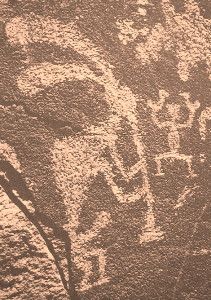
The humpbacked kokopelli image is found from Casa Grande, Mexico to the Hopi and Rio Grande Pueblos and then westward to the Californian deserts in prehistoric rock, effigy figures, pottery, and on kiva walls. Some say the reason he has a hump or is bent over is that he was carrying a heavy sack, perhaps full of seeds or some say with an unborn child he is going to deliver.
This slideshow requires JavaScript.
Anasazi, Hohokam and Mibres peoples used the symbol on their pottery. Today many southwest Native Americans use the symbol on their pottery.
This slideshow requires JavaScript.
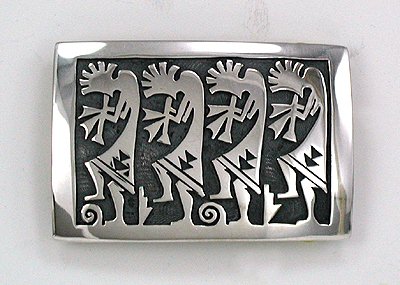
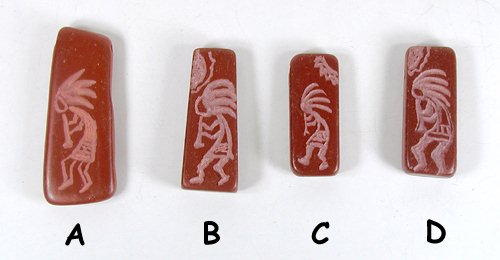
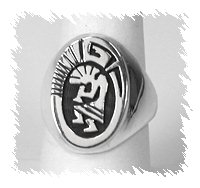
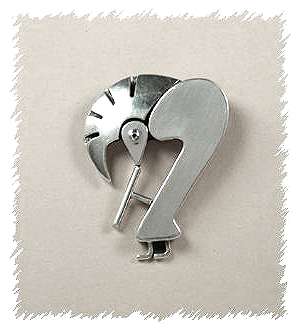
Many Native American tribes use the kokopelli symbol. Here are some samples of its usage by Hopi, Zuni, Navajo and Oglala Lakota artists. Click the photos for more information.
Hopi Overlay Kokopelli Belt Buckle by Steven Sockyma
Oglala Lakota Catlinite (pipestone) pendants
Navajo Overlay Kokopelli Ring by Calvin Peterson
Navajo Sterling Silver Kokopelli Pin Pendant by Robert Vandever
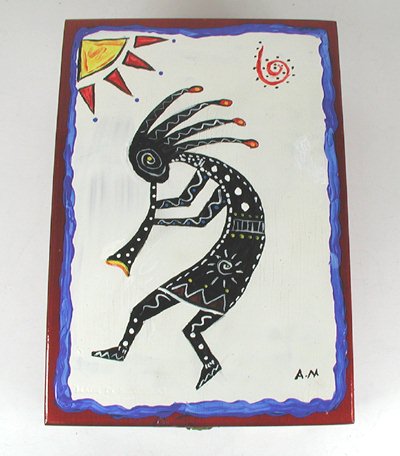
You may have heard of Ledger Art, where Plains Indians used the materials at hand, such as old ledger paper from forts and missions, on which to paint and draw. Well, this is Cigar Box Art, a creative repurposing of vintage cigar boxes by Lakota artist Alan Monroe.This box has a large capacity so will hold quite a few treasures or a good amount of sage and other smudging supplies.
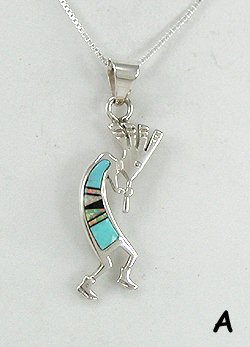
Navajo Kokopelli Inlay Pendant
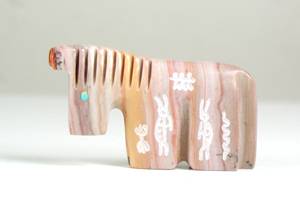
Zuni Horse Fetish with Kokopelli petroglyphs by Tyrone Poncho
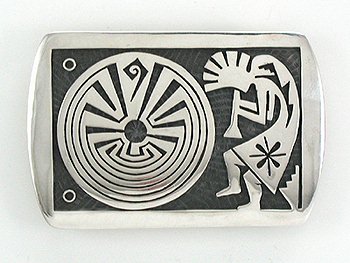
Hopi Kokopelli Overlay Belt Buckle by Joe Josytewa
This article is meant to round up the various interpretations of kokopelli, not serve as a definitive tome on the subject.





 Native American Jewelry Tips